Ulla Viotti: Art, life and clay: Part II
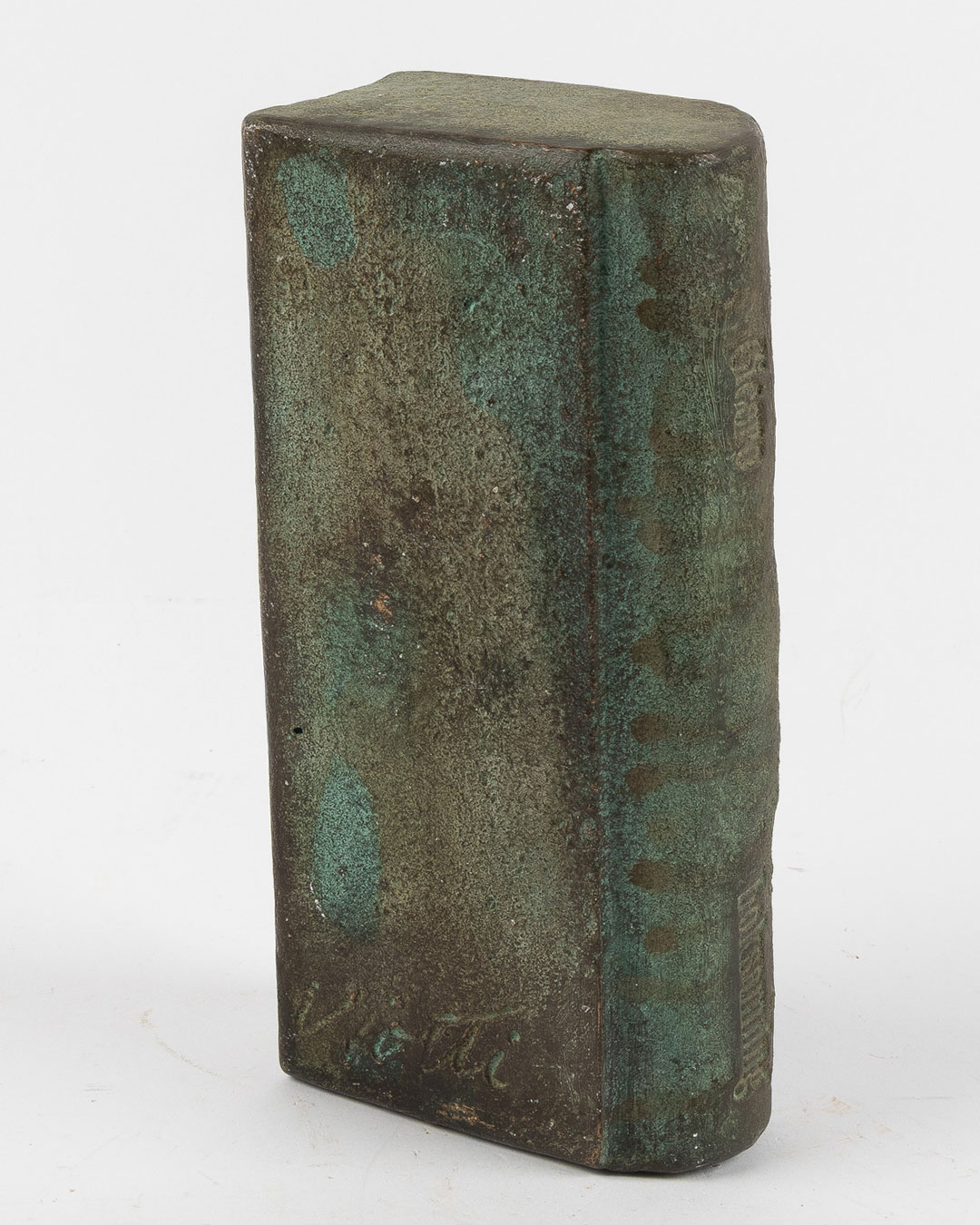
Ulla Viotti stands out as one of the most consistent and conceptually driven artists within modern and contemporary Swedish ceramics. Her practice moved away from the traditionally functional and decorative, placing clay instead within an architectural and autonomous context. With unglazed surfaces, brick and the tactile qualities of clay as recurring fundamental elements, she developed a visual language in which the weight of the material, repetition and spatial presence took centre stage. Viotti’s powerful yet at the same time understated mode of expression has meant that her works can today be seen in countless public spaces throughout Sweden, including churches, swimming halls, libraries, town squares and courthouses.
Viotti (b. 1933) began her ceramic training as early as the age of 17 at the School of Art in Blackpool. As one of the youngest students ever admitted, she entered Konstfack in Stockholm in 1952, studying under, among others, Märta Anckarswärd Grönwall and Edgar Böckman. After graduating, she held positions at, among other places, Rörstrand and with Irma Yourstone. In 1960, Viotti took over the workshop of ceramicist Olle Hermansson in Karlskoga. Having initially worked within a more traditional ceramic tradition of figures and functional objects, she soon developed an interest in the sculptural possibilities of clay. Her works attracted attention and were exhibited early on, not least as permanent features in the shop „Ola Inredning“ in Karlskoga, where they were shown alongside furniture by Alvar Aalto and ceramics by Carl-Harry Stålhane. Viotti also gained early recognition in Stockholm, with exhibitions at, among other venues, Konsthantverkarna in 1962, Svensk Hemslöjd’s jubilee exhibition at Liljevalchs konsthall, and not least the groundbreaking exposition „Form Fantasi“, organised by Svenska Slöjdföreningen in 1964.
- Online auction
- June 12
Catalogue
Unsere Tätigkeit