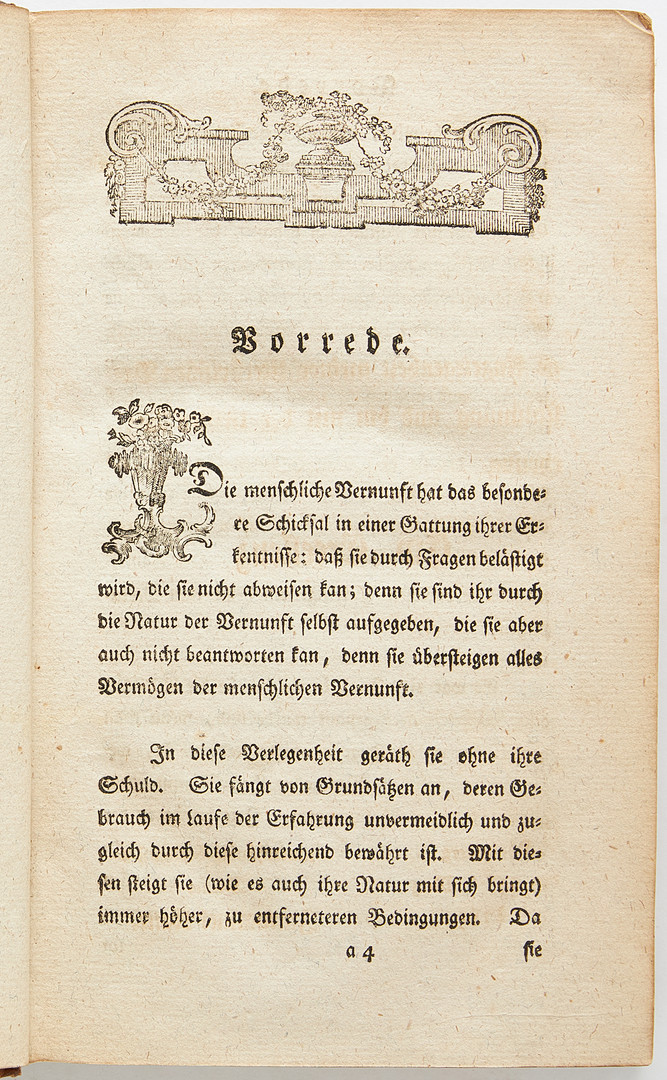
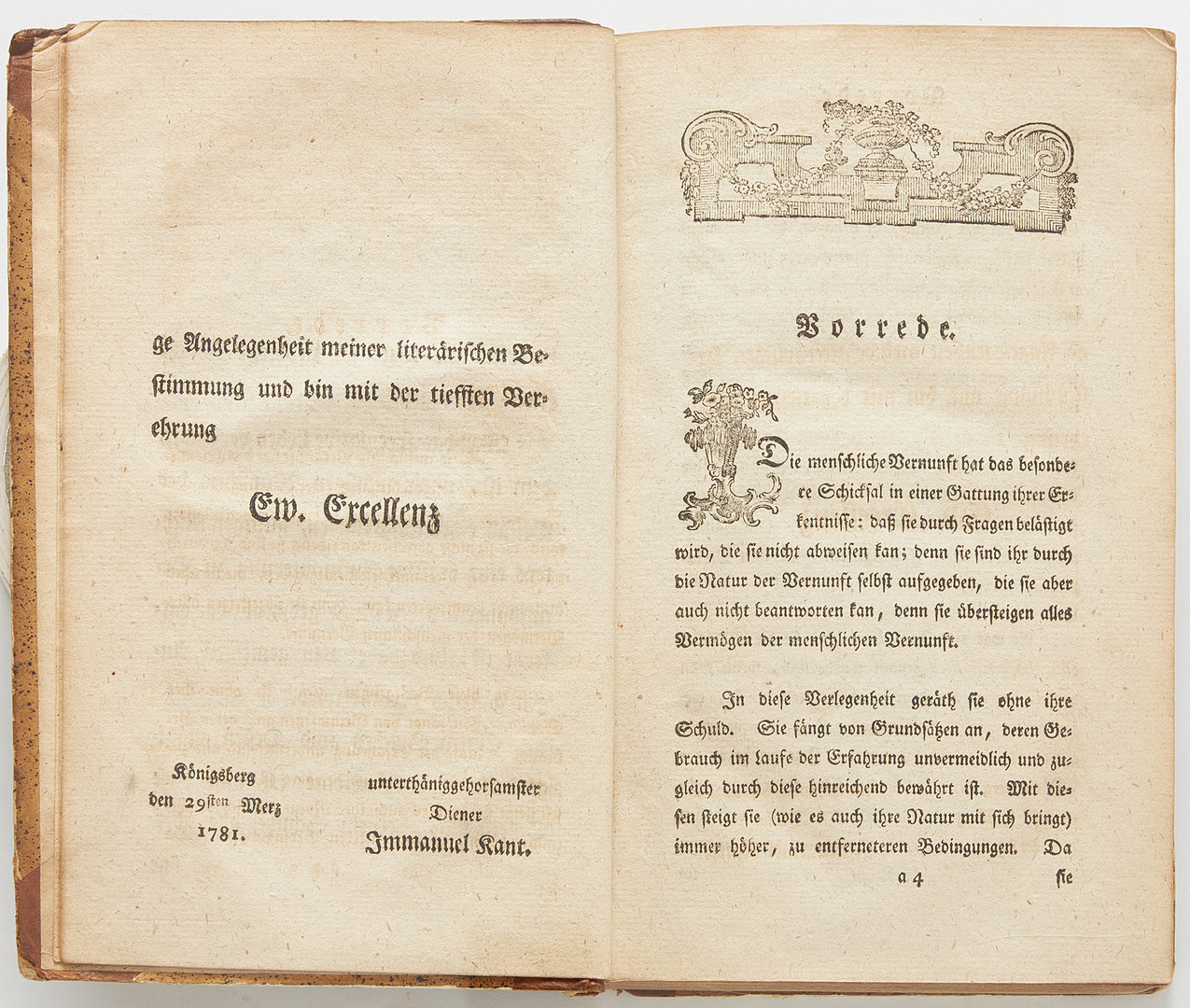
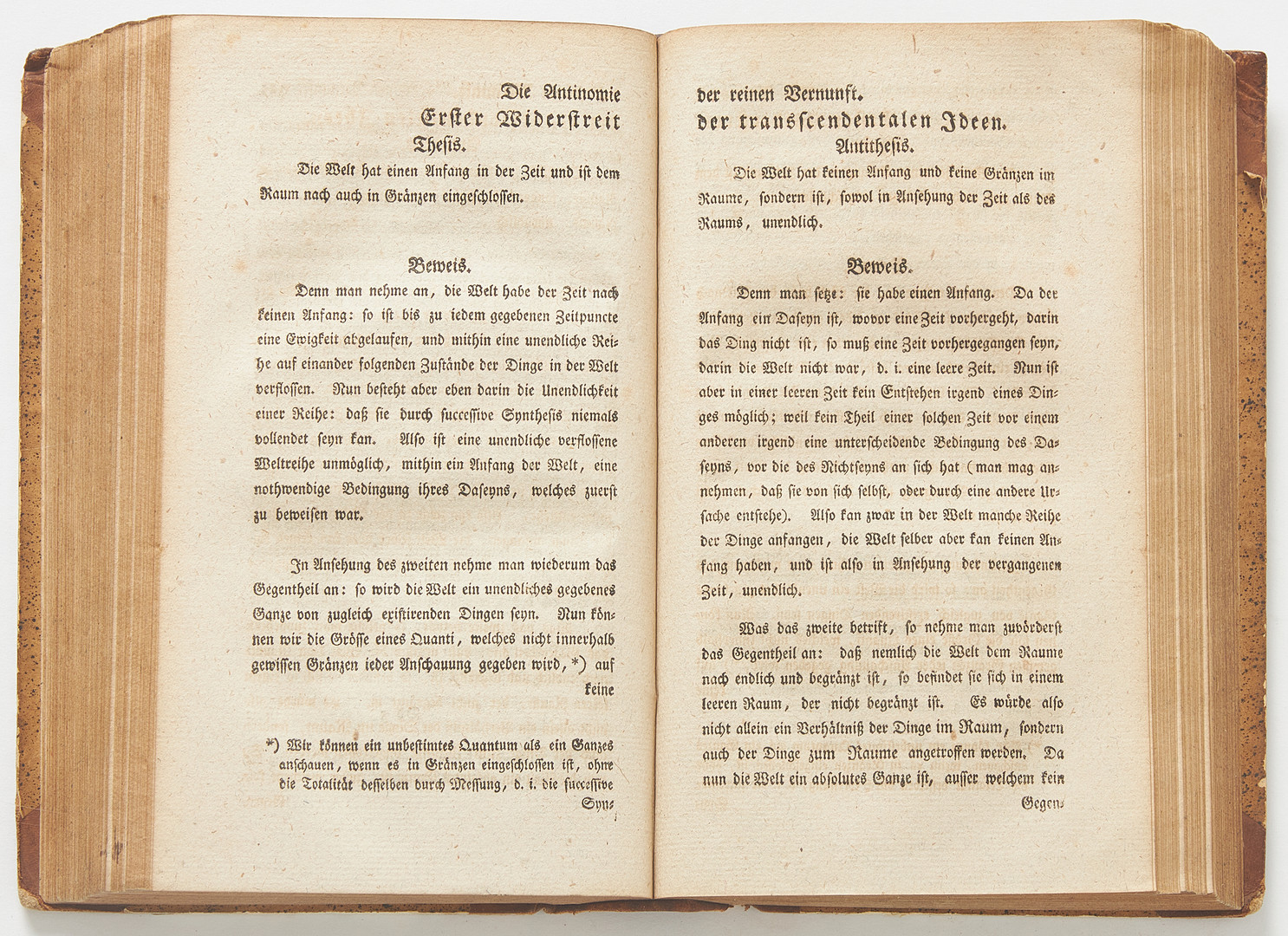
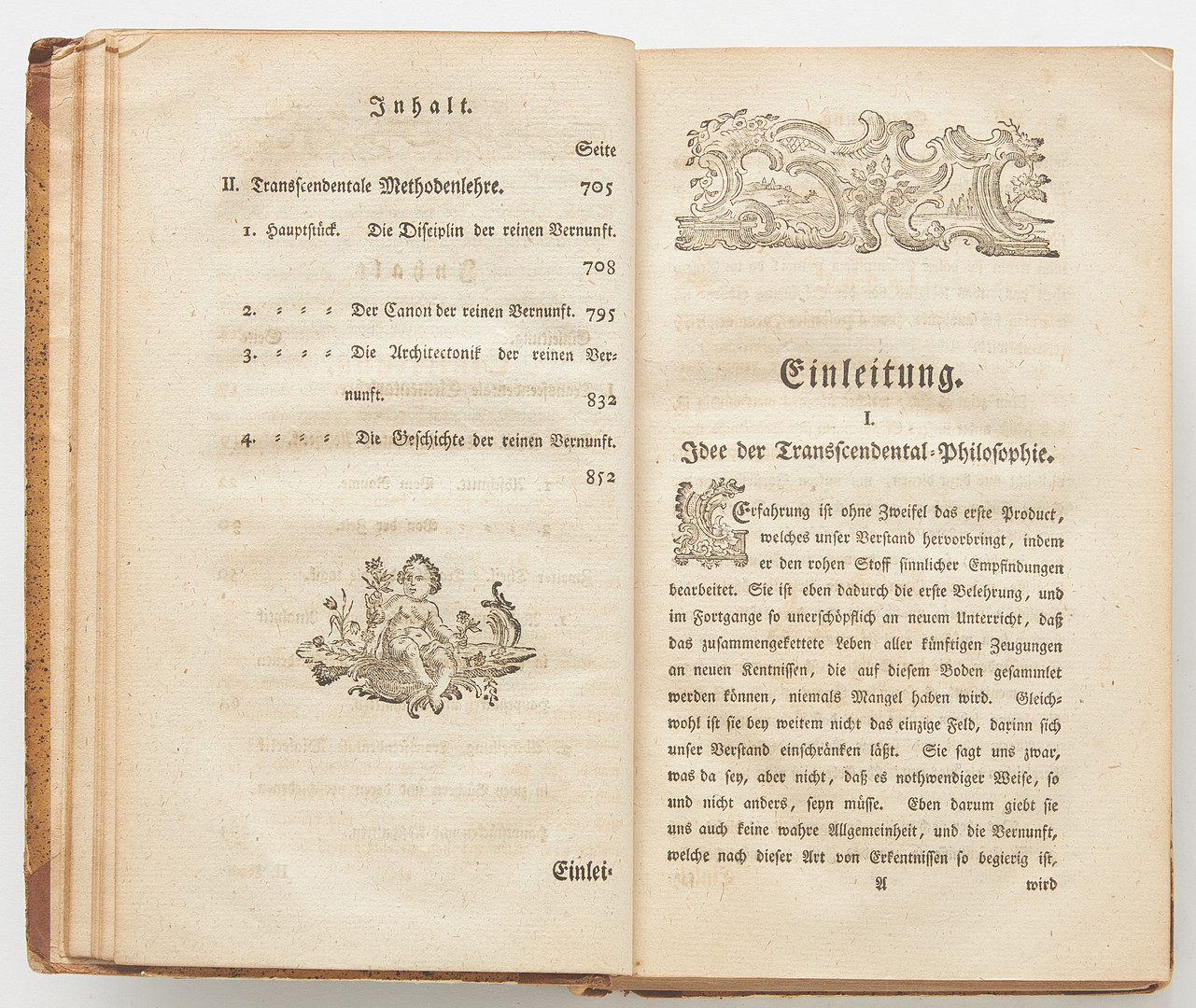
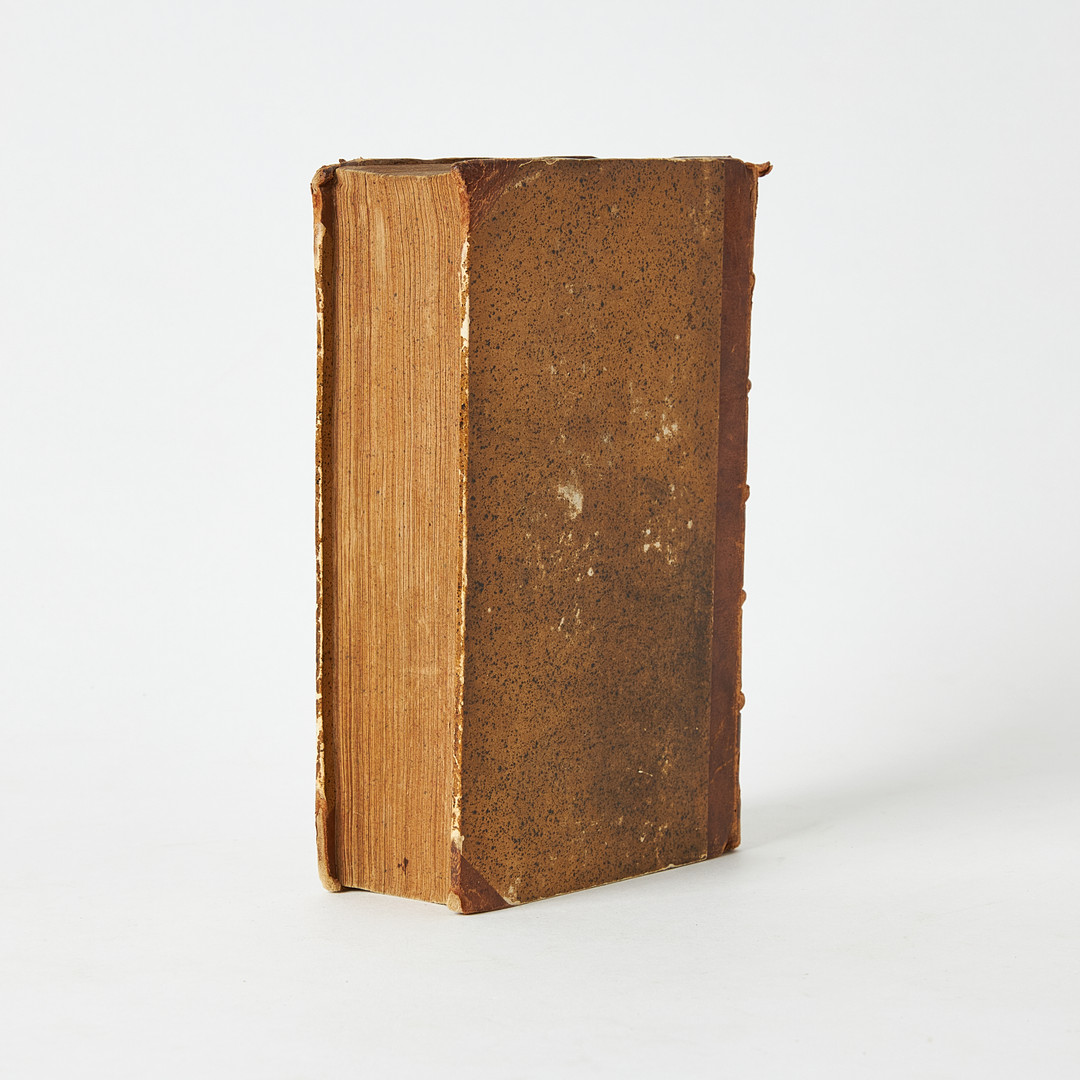
KANT, IMMANUEL. Critik der reinen Vernunft. Riga, Joh. Fr. Hartknoch, 1781.
FIRST EDITION OF ONE OF THE MOST INFLUENTIAL WORKS IN THE HISTORY OF PHILOSOPHY.
8vo (195x118 mm., 200x125 mm. binding). (24), 1-425, (36), 461-856 pp.
Contemporary half calf binding, partly rubbed and worn, small split in upper inner hinge, upper corners slightly bumped, gilt spine in compartments with title label, damages to upper part of spine, speckled edges. Title slightly browned to margins, also last two leaves, text clean only with slight foxing, some pages with creases towards the end. Signature of Ingeström on first free endpaper, small monogram on inside of upper board.
Provenance: Anne-Marie Fries, born Ingeström (1907-1991), Swedish translator, also known as the model for the character "Madicken" in Astrid Lindgren's novel; later given to the current owner.
Printing of the Mind of Man, 226.
The Copernical turn in the history of thought and the beginning of modern philosophy. First edition of this milestone, in which Kant analyses the foundations and limits of human cognition. Only this first edition contains the original text, all subsequent editions are based on the second edition of 1787, which was substantially revised by Kant.
Only the first edition presented here contains the original text; all subsequent editions go back to the second edition of 1787, which was significantly changed by Kant.
Starting from the question “What can I know?” In over 800 pages, Kant examines the conditions of human cognitive ability and comes to the then revolutionary conclusion that knowledge is not determined by the objects, but rather the objects are determined by the form of our knowledge. We always only grasp the appearance of things, but not the things themselves. In this way, Kant, among other things, evades. Even the basis of traditional metaphysics, an intellectual knowledge of God or the soul is no longer possible after Kant. "He stormed the sky, he made the entire crew jump over the sword, the overlord of the world swims unproven in his blood" (Heinrich Heine).