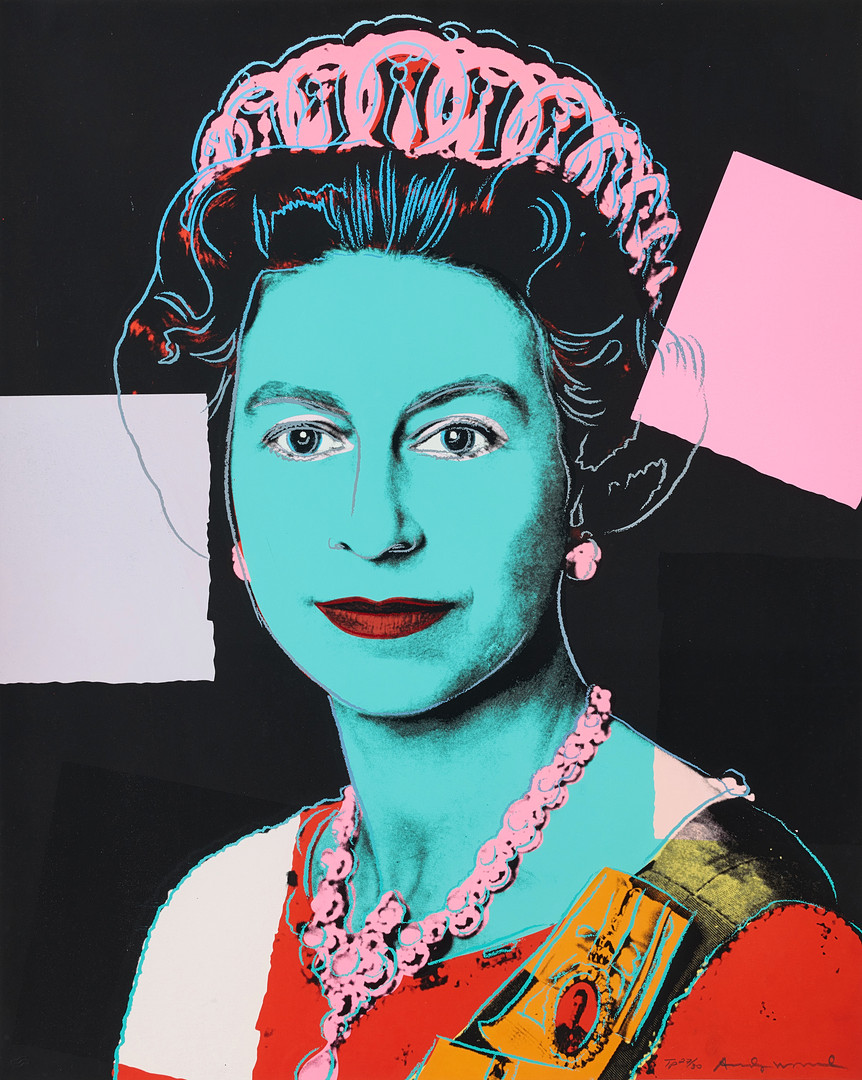
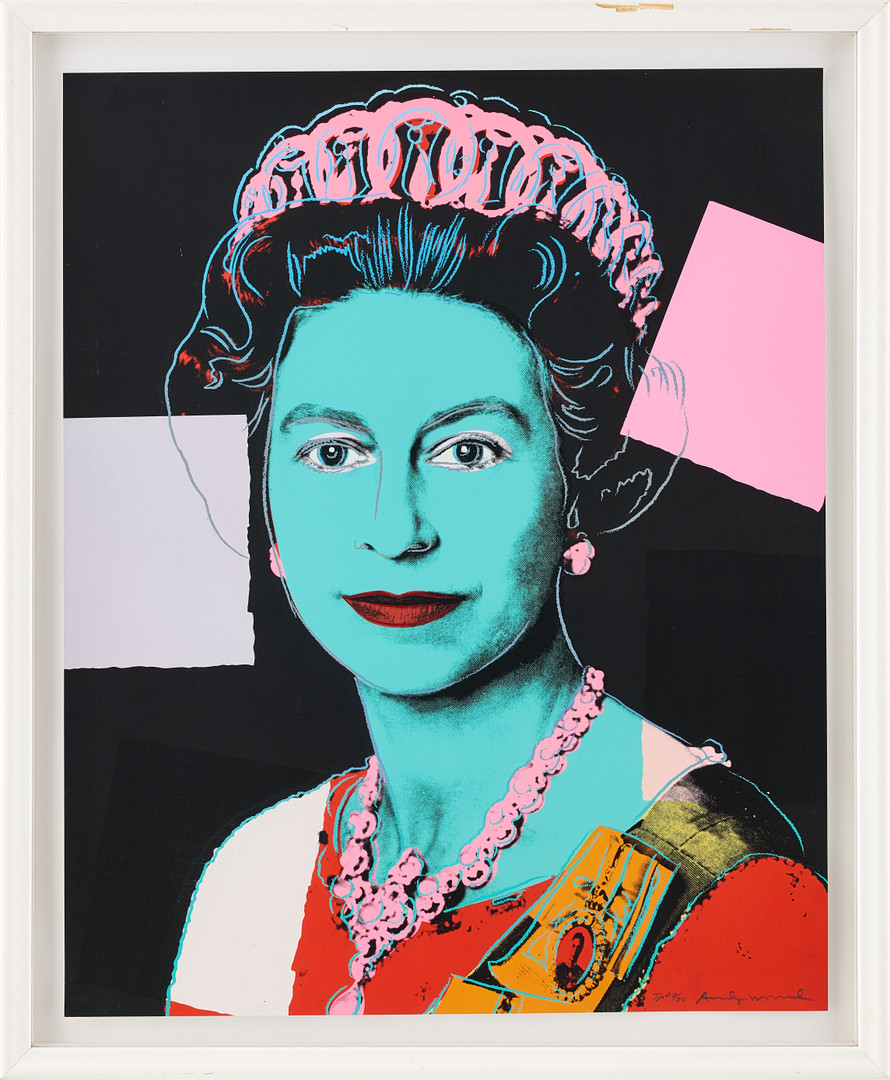
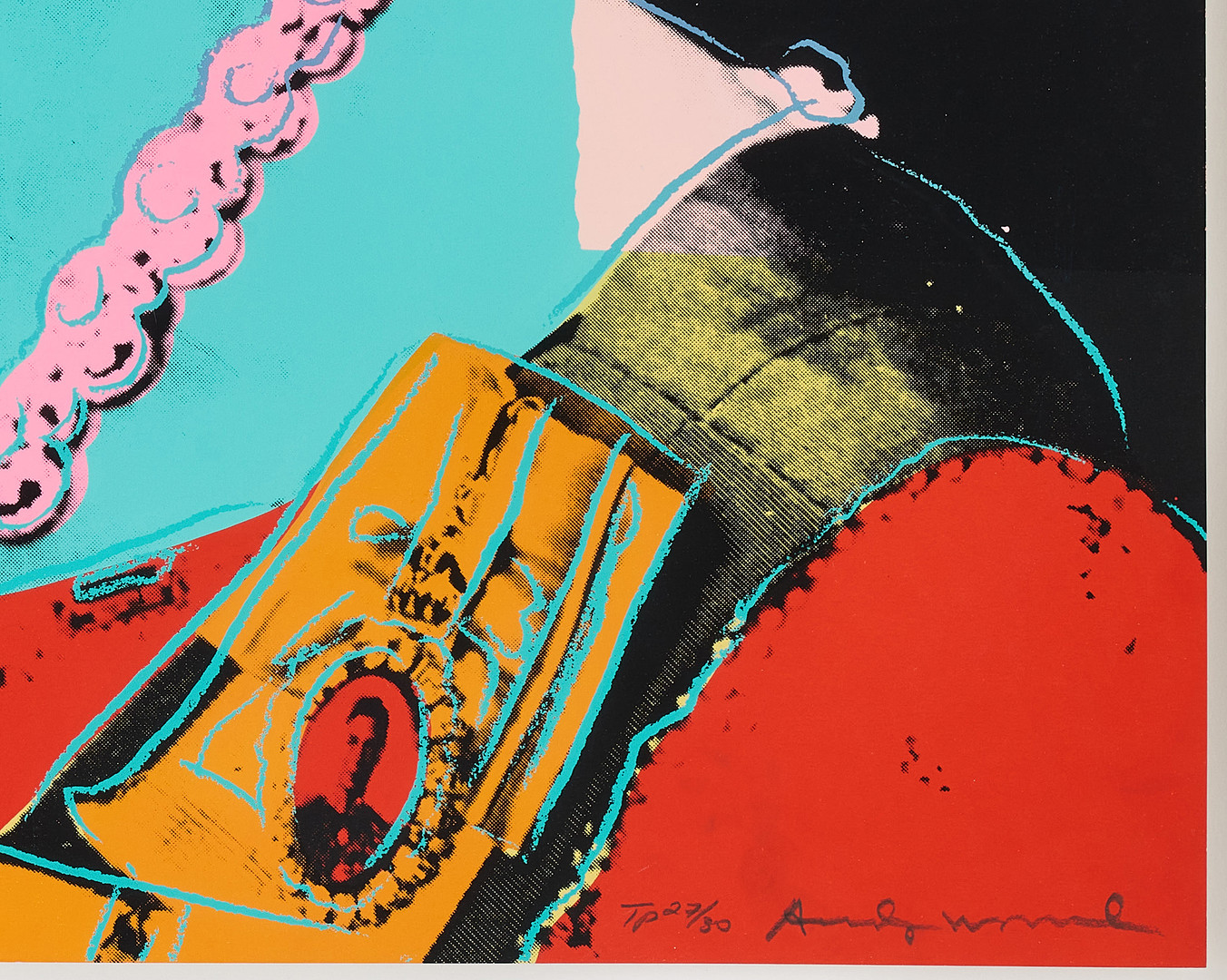
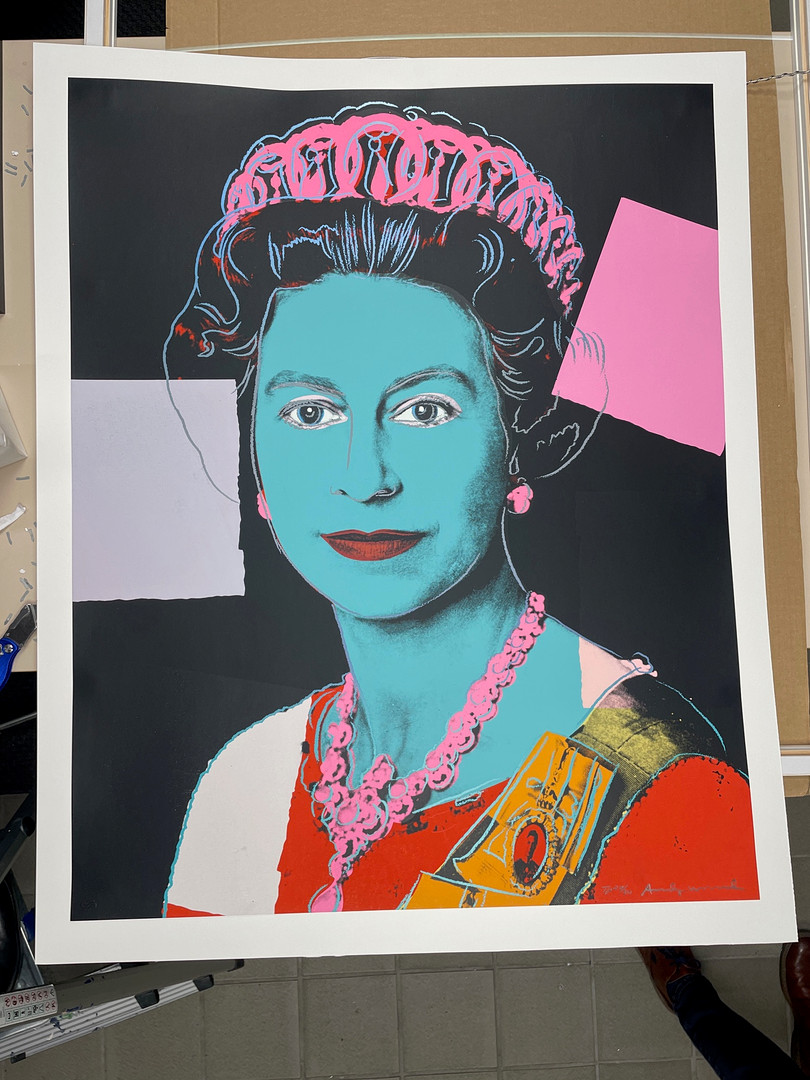
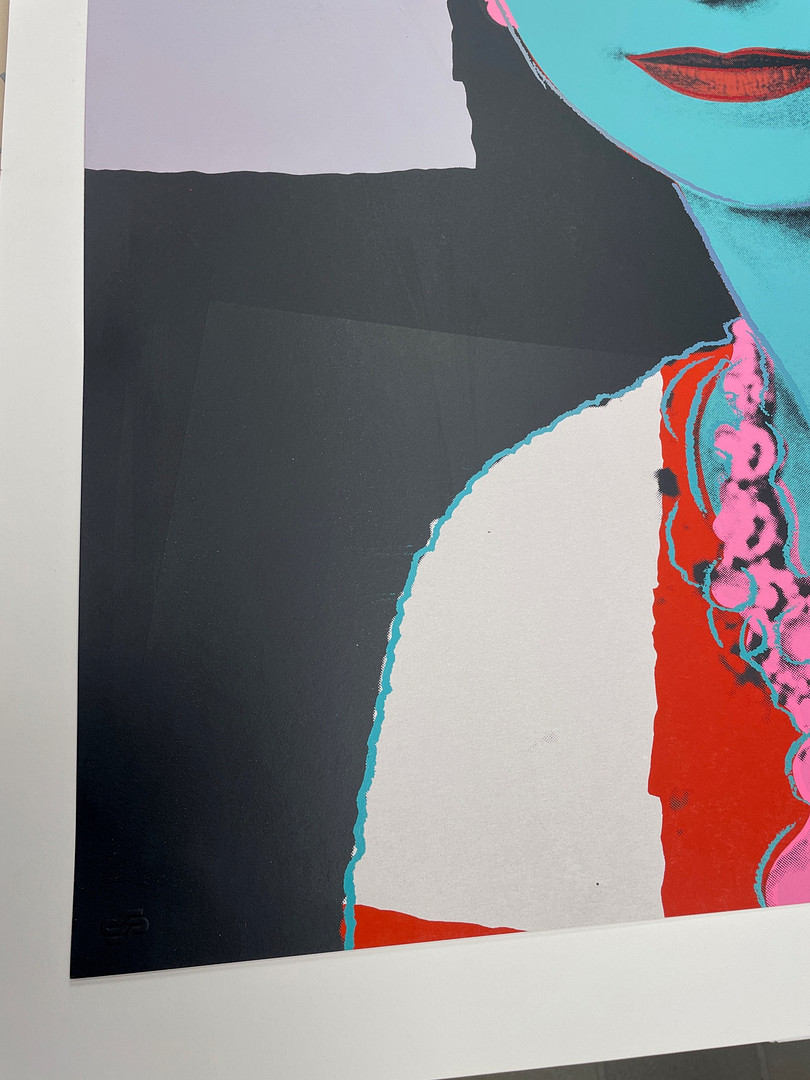
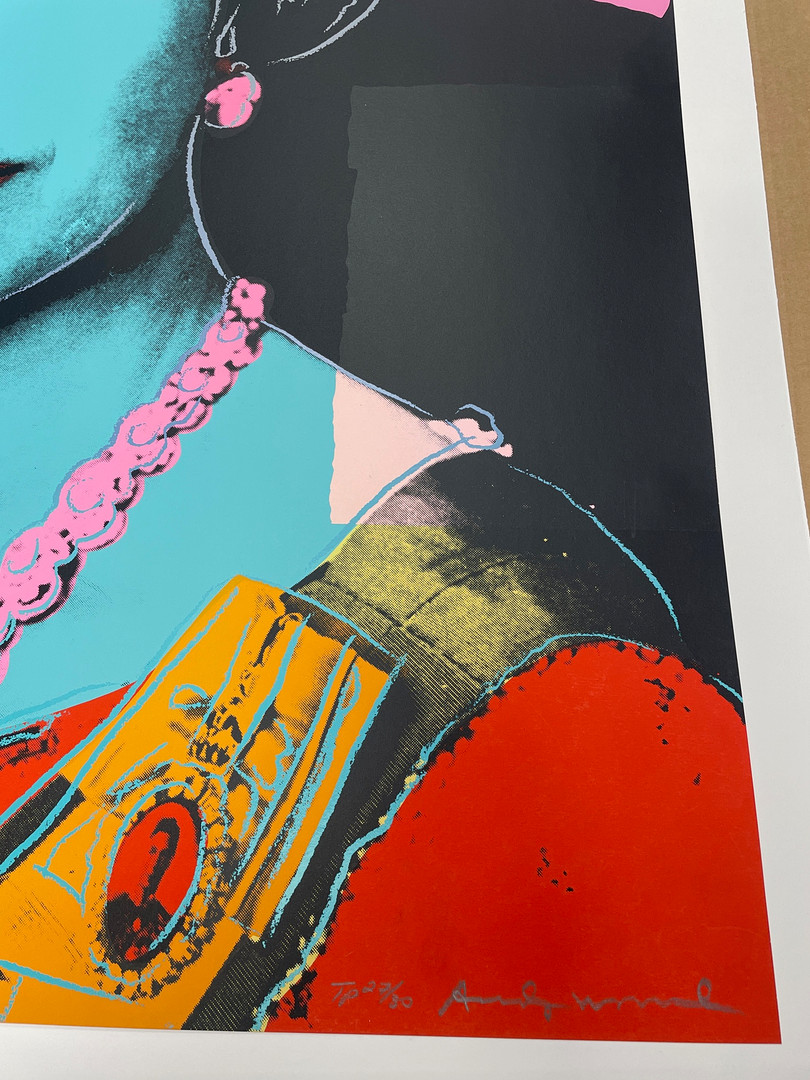
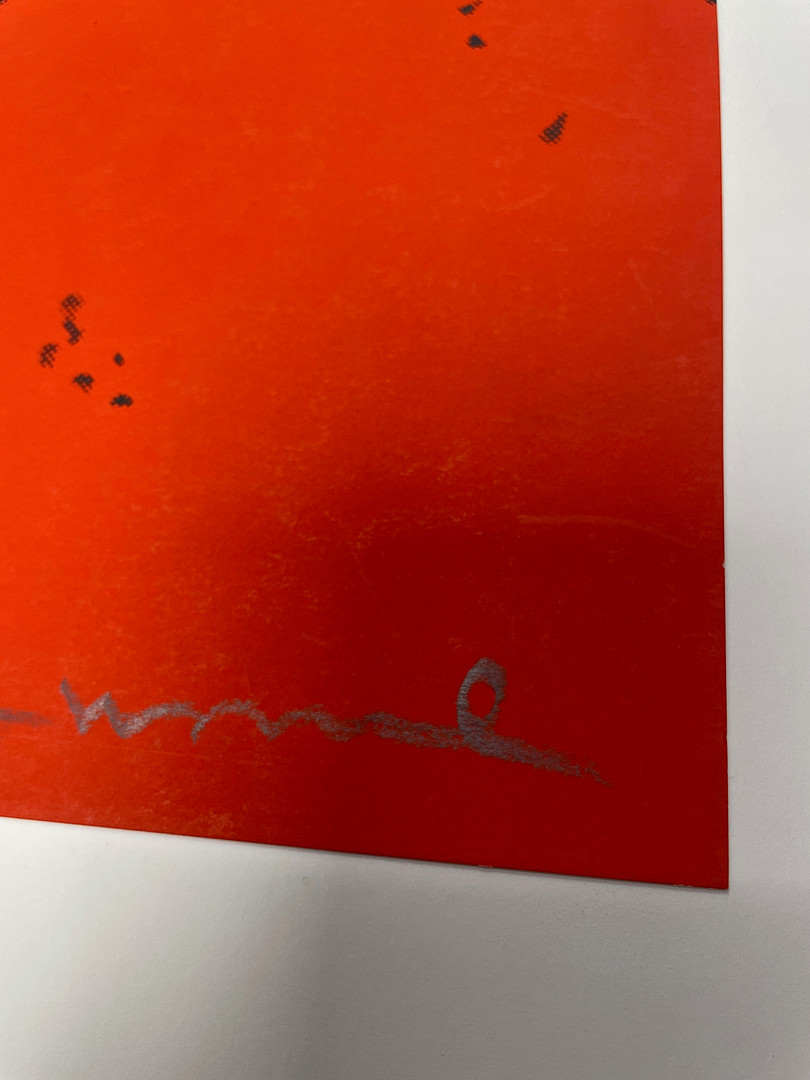
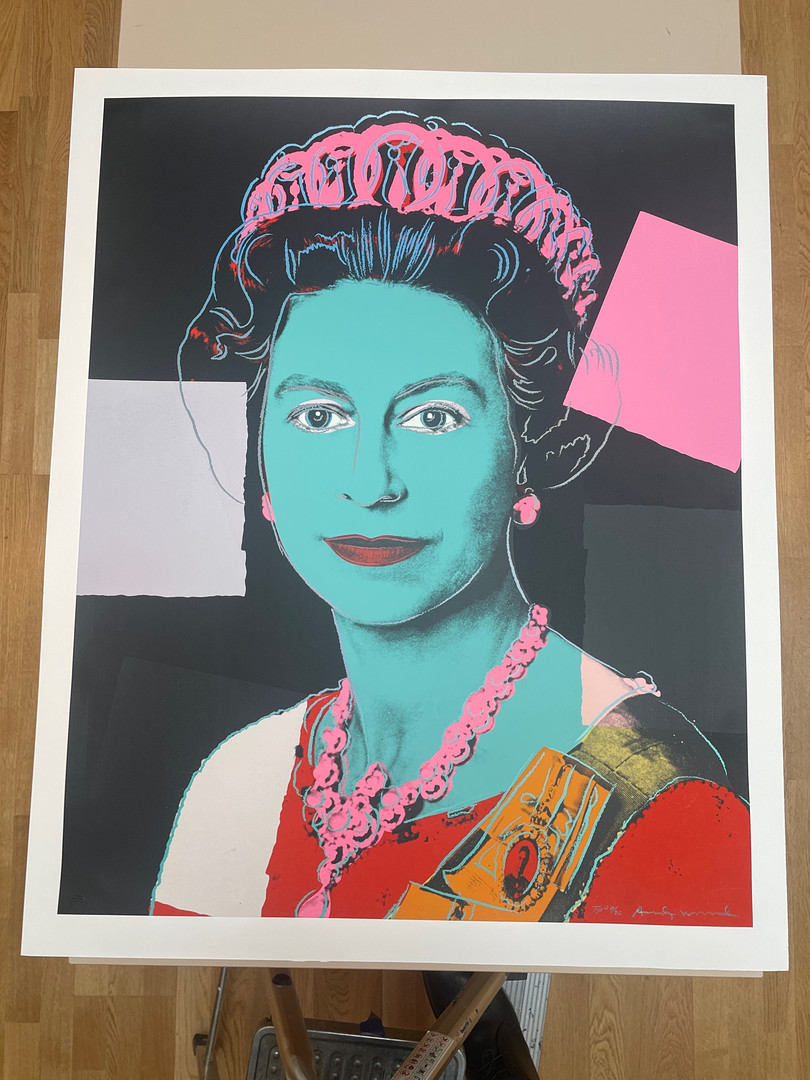
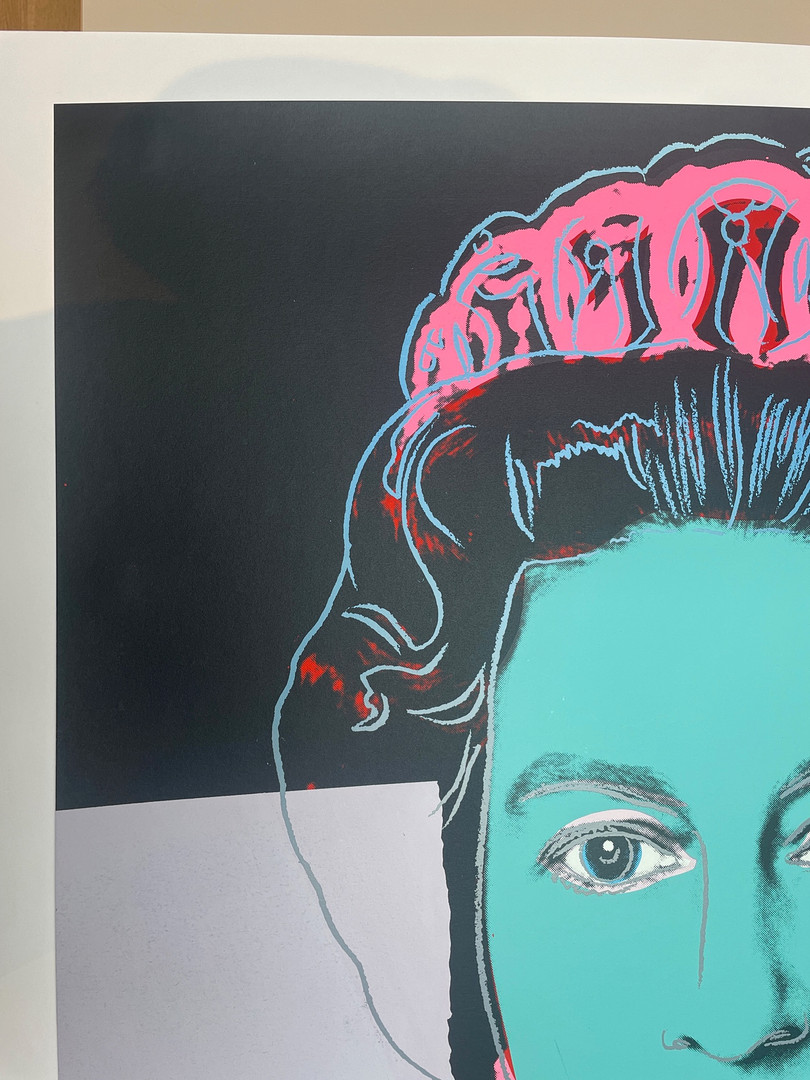
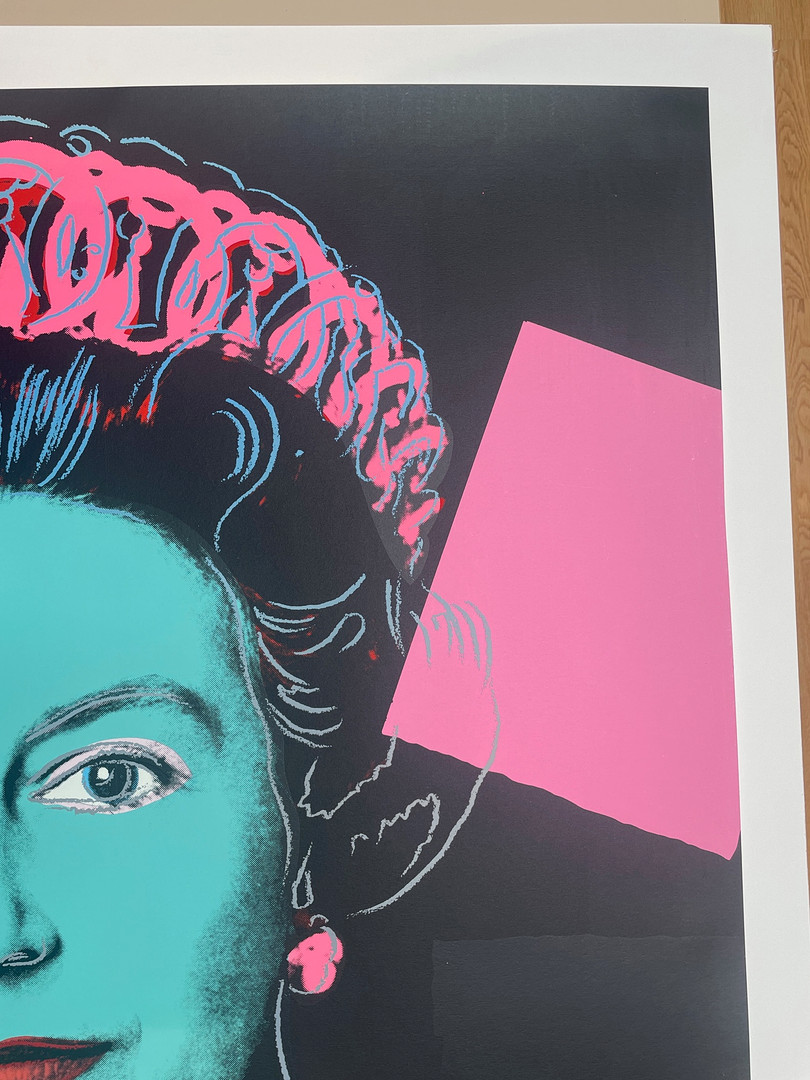
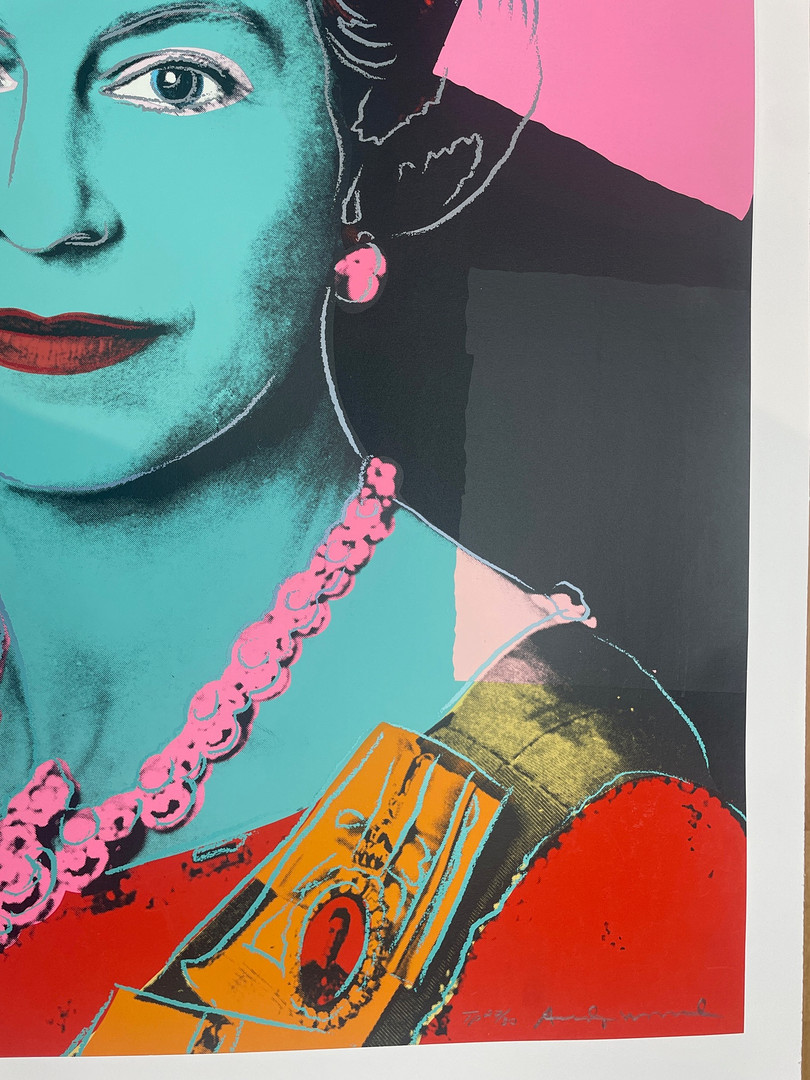
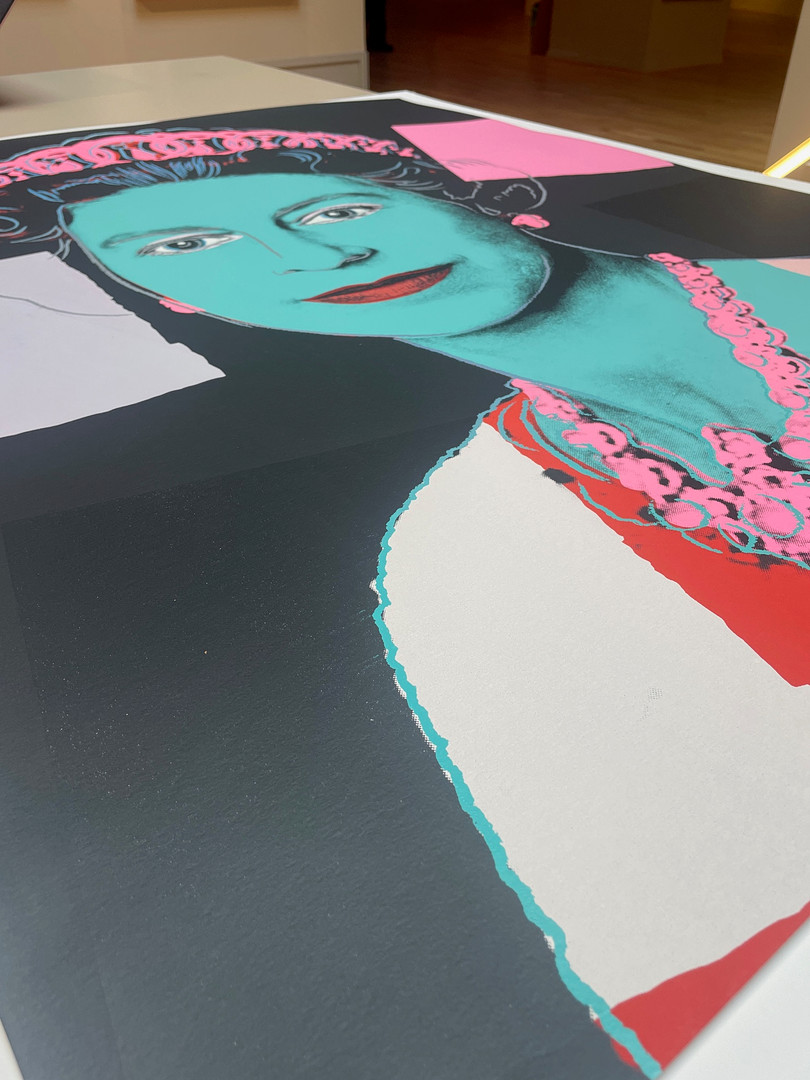
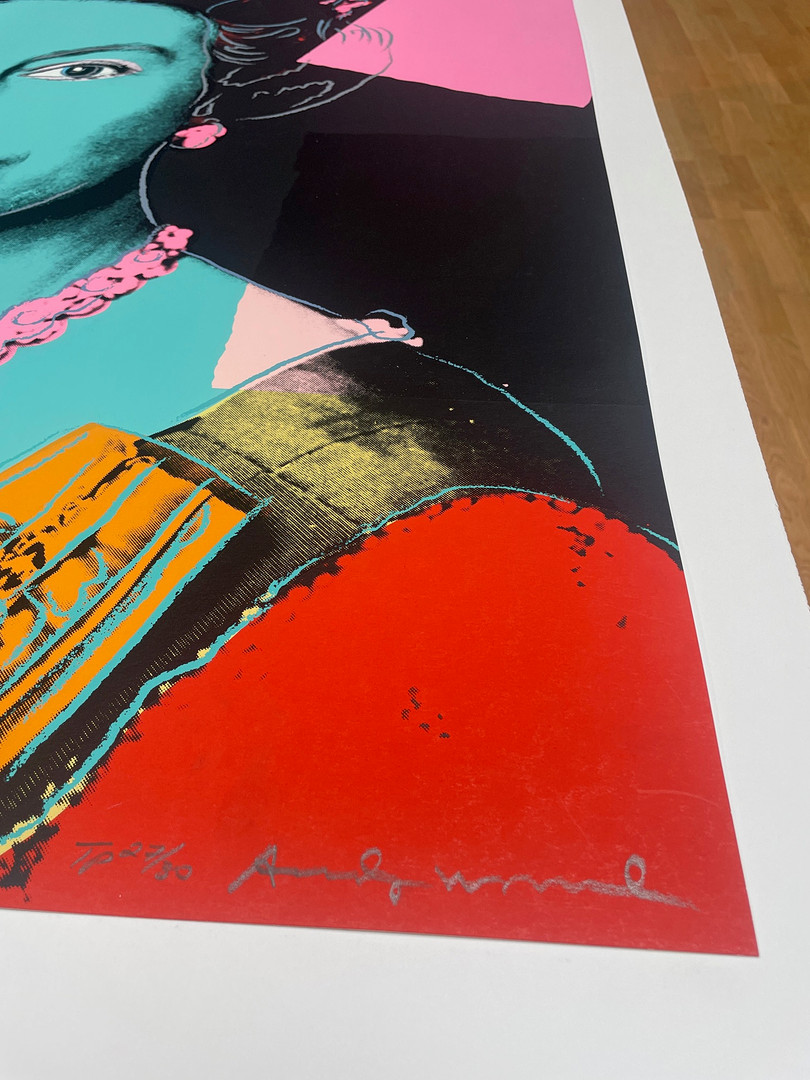
Screenprint on Lenox Museum Board, 1985, signed and numbered TP 27/30 (unique 'Trial Proof'). Printed by Rupert Jasen Smith, New York. Published by George C. P. Mulder, Amsterdam.
S. 100 x 80 cm.
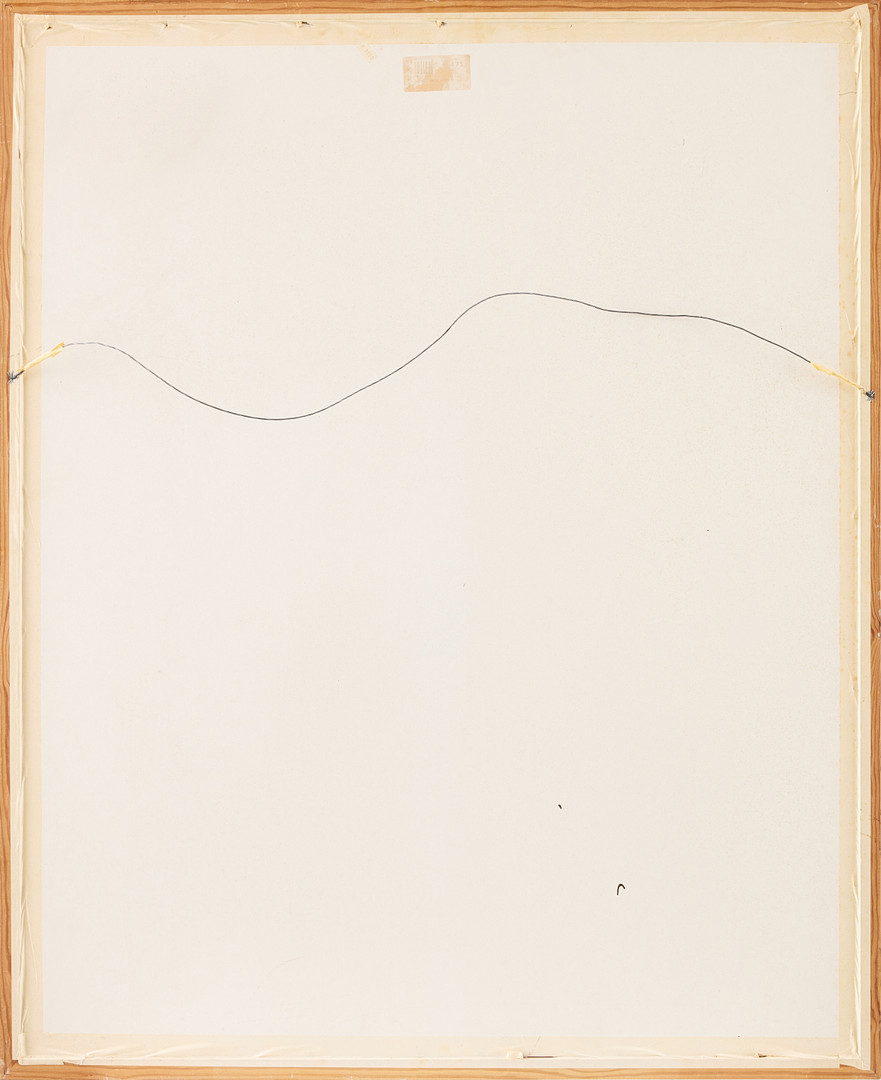
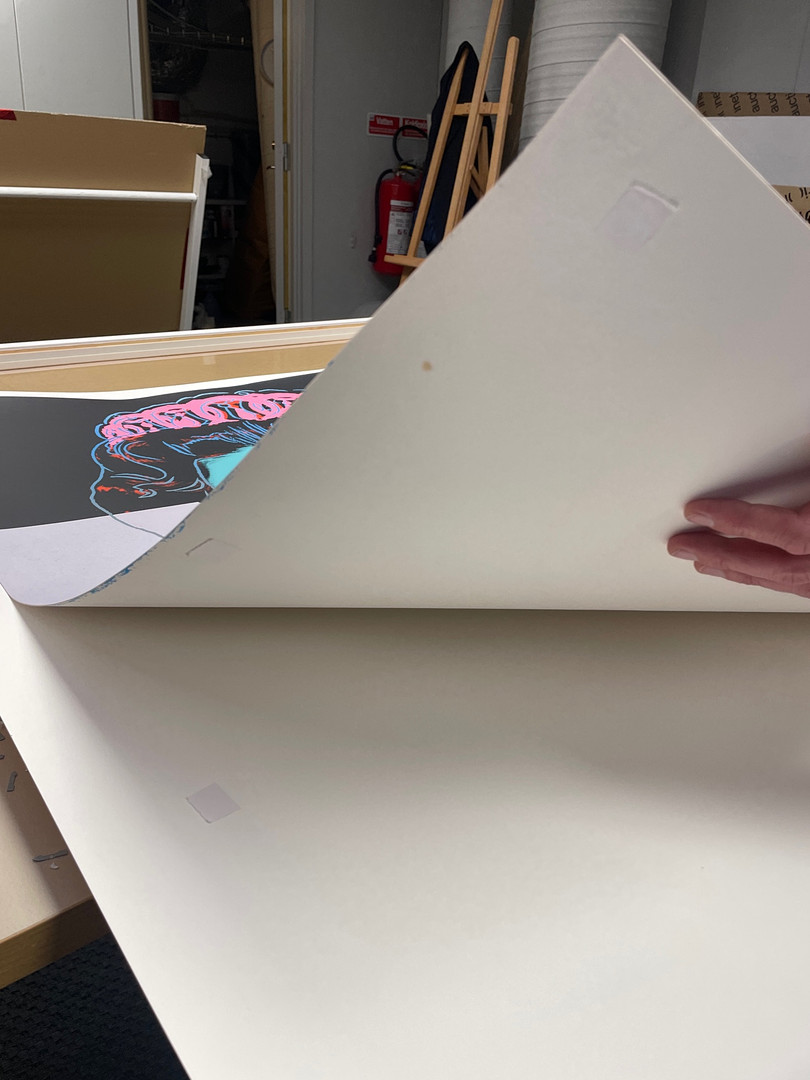
Including frame 113 x 93 cm.
Feldman/Schellmann IIB. 334-337.
This copy is a so-called Trial Proof. These were executed in an edition of 30 copies, each in a unique colorway. The total edition amounted to 40, 10 AP, 5 PP, 3 HC and, as this is an example of, 30 TP.
Compare Feldman/Schellman 334-349.
Andy Warhol's "Queen Elizabeth II" is a bold color screenprint portrait from the artist's "Reigning Queens" series created in 1985, and represents one of Great Britain's most prominent monarchs. The present work is a unique trial proof, with color variations different from any other work in the series, carefully selected by Warhol and meticulously applied. As such, the work is analogous to the iconic color screenprint paintings from the early 1960s, including the Campbell's Soup cans and Marilyn Monroe series, which catapulted Warhol to international art fame. "Queen Elizabeth II" was created at the height of his artistic career, the pinnacle of his success and worldwide acclaim, only two years before his untimely death in New York following complications from surgery. It remains among his most recognizable and enduring images, an indelible synchrony between one of Pop Art's top masters, capturing the regality and essence of one of the foremost royal figures of the modern era.
This is one of just thirty different unique color trial proofs that Warhol made of Queen Elizabeth II. These unique color works rarely appear on the market and there has not been another variation similar to the present portrait, with the bluish green face, at auction since 2013. The image is part of the "Reigning Queens" portfolio of screenprints, which also included portraits of Queen Beatrix of The Netherlands, Queen Magarethe II of Denmark, and Queen Ntfombi Twala of Swaziland. Aside from the unique trial proofs, the standard series consists of four different variations of each of the four queens, issued in an edition of forty (there is also a "Royal Edition" with diamond dust added to the printing, issued in an edition of thirty).
The portrait of Queen Elizabeth II is based on the official photograph of the monarch by Peter Grugeon, taken at Windsor Castle in 1975, and released for her Silver Jubilee in 1977. The official portrait is also widely seen on currency throughout the United Kingdom. All of which reflects Warhol's fascination with mass production. According to a statement from the British Royal Collection, "Warhol has simplified Grugeon's portrait so that all that remains is a mask-like face. All character has been removed and we are confronted by a symbol of royal power." Four prints of Queen Elizabeth II from the "Royal Edition" were acquired by the Royal Collection of the British royal family in 2012. These prints are the only ones in the Royal Collection that Queen Elizabeth II did not sit for or commission.
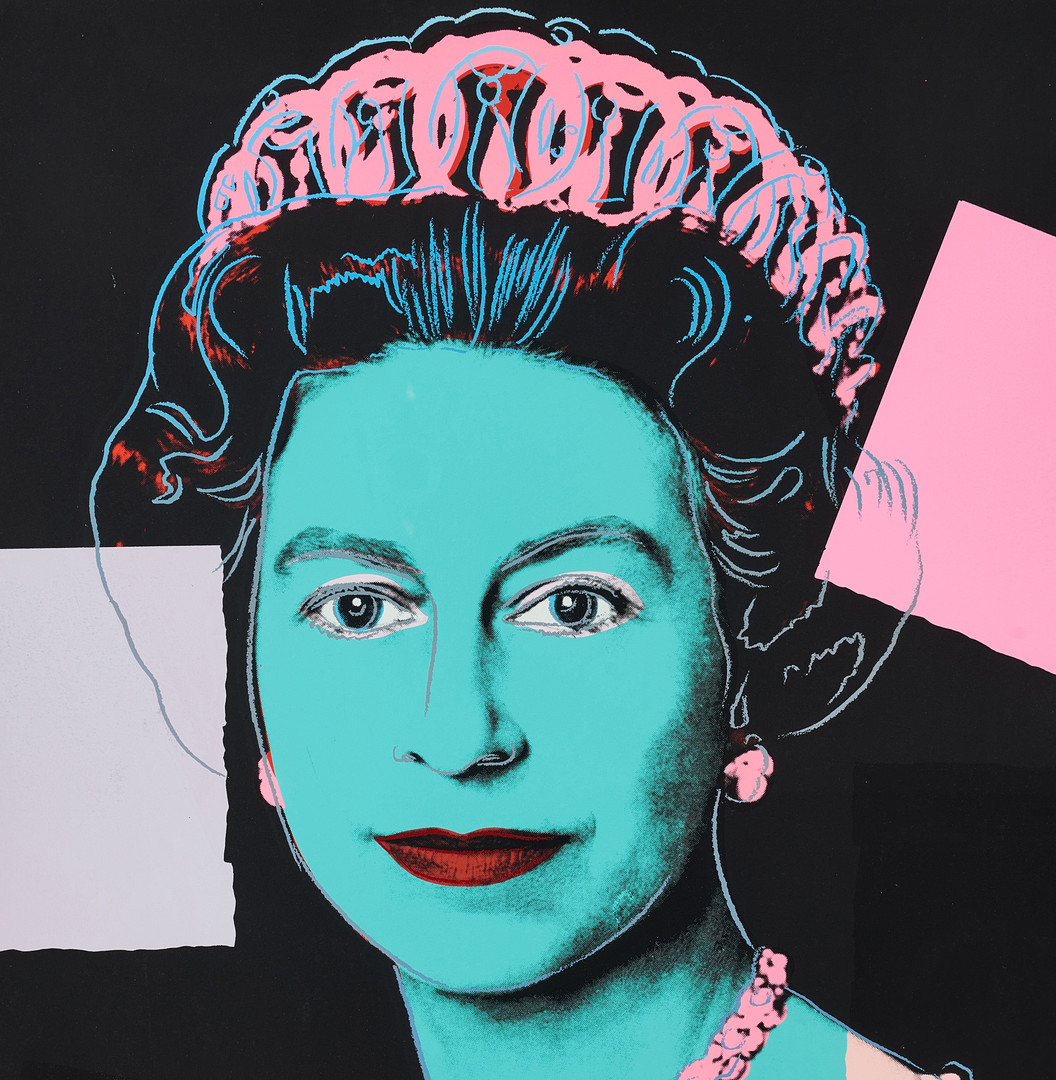
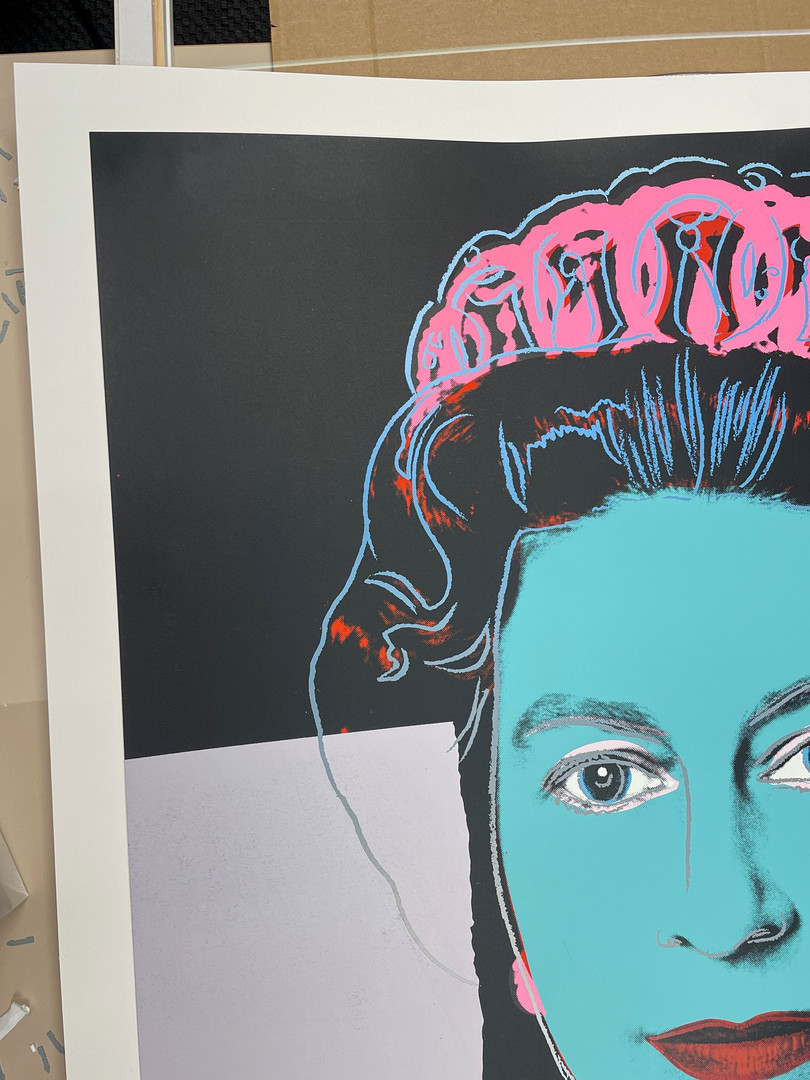
The Queen is depicted wearing the Vladimir Tiara, the Golden Jubilee necklace and the Garter sash. Warhol appropriated the photographic image by Peter Grugeon, cropped it, and thrusted the portrait forward. It is the central focus of the viewer, the Queen stares directly outward and smiles elegantly. There is a parallel with Warhol's portrait series of Mick Jagger made a decade earlier. Through the use of bold, bright colors, in particular the glowing pink tiara and the Queen's bluish green face, singular to this work, Warhol transformed the portrait into a Pop Art masterpiece. The blocks of color around the portrait are reminiscent of those used by Warhol in the "Ladies and Gentlemen" series of 1975. The popular American magazine "Time" aptly posited that Warhol's portrait of Queen Elizabeth II, "Treat her like any other celebrity, frozen in time and bright colors."
Warhol once commented ambitiously, "I want to be as famous as the Queen of England". His drive for fame, his obsessions with advertising, mass media, and celebrity culture, led him to create these masterpieces of Pop Art portraiture, from Marilyn Monroe and Elizabeth Taylor, to this captivating image of Queen Elizabeth II. The portrait emanates the essence of Queen Elizabeth II, the regal pomp, her female authority, and a hint of frailty evoking her becoming queen at the age of only twenty-five (she reigned subsequently for more than seventy years), while it is simultaneously a Pop Icon, extravagant in color and design. Though at the time he was displeased with the showing of the portraits at the Leo Castelli Gallery in New York, he assumed that no one in America cared for royalty and the "Reigning Queens" series was initially intended for exhibition only in the United Kingdom, Warhol's portrait of Queen Elizabeth II has nevertheless become one of the artist's most enduring images and over the past decades has been coveted by an audience worldwide.