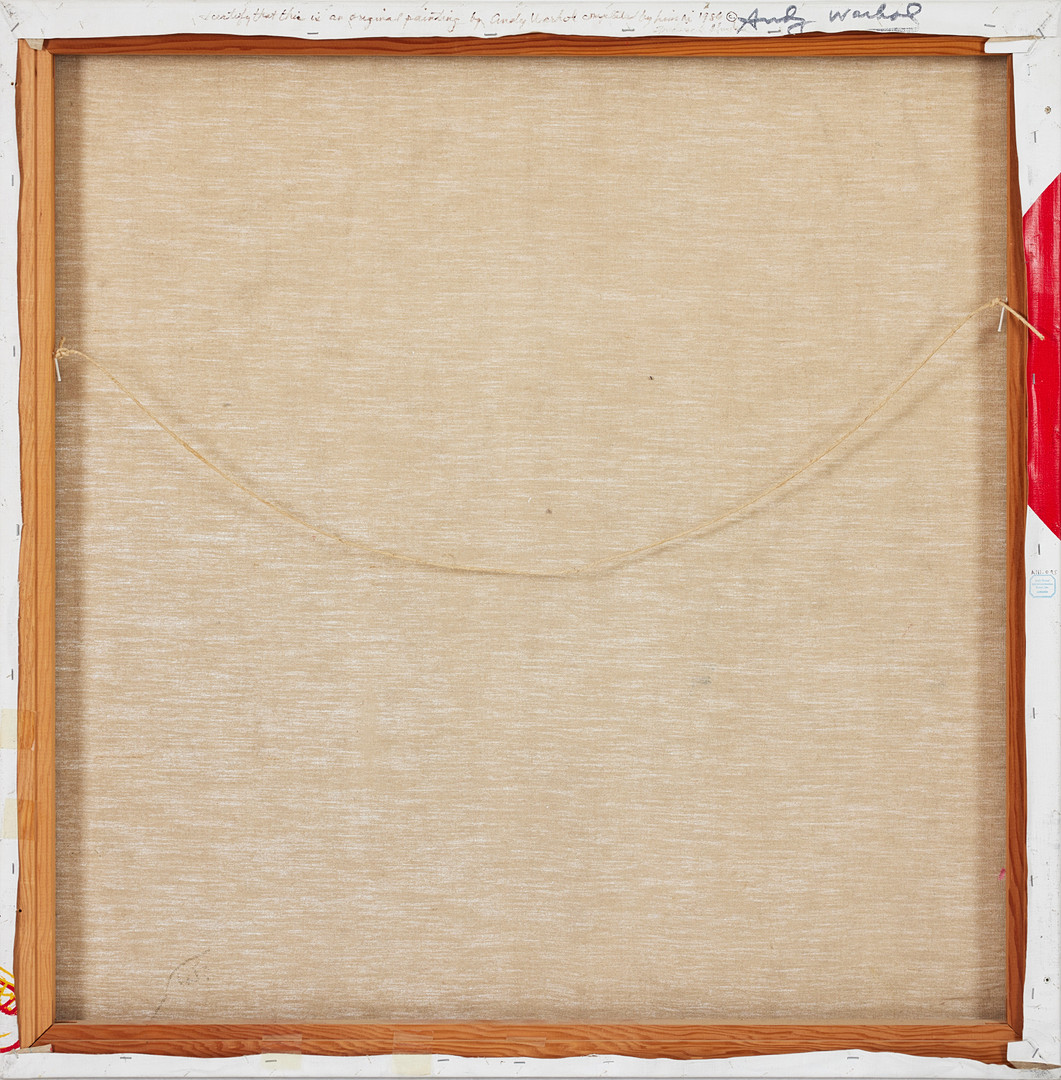
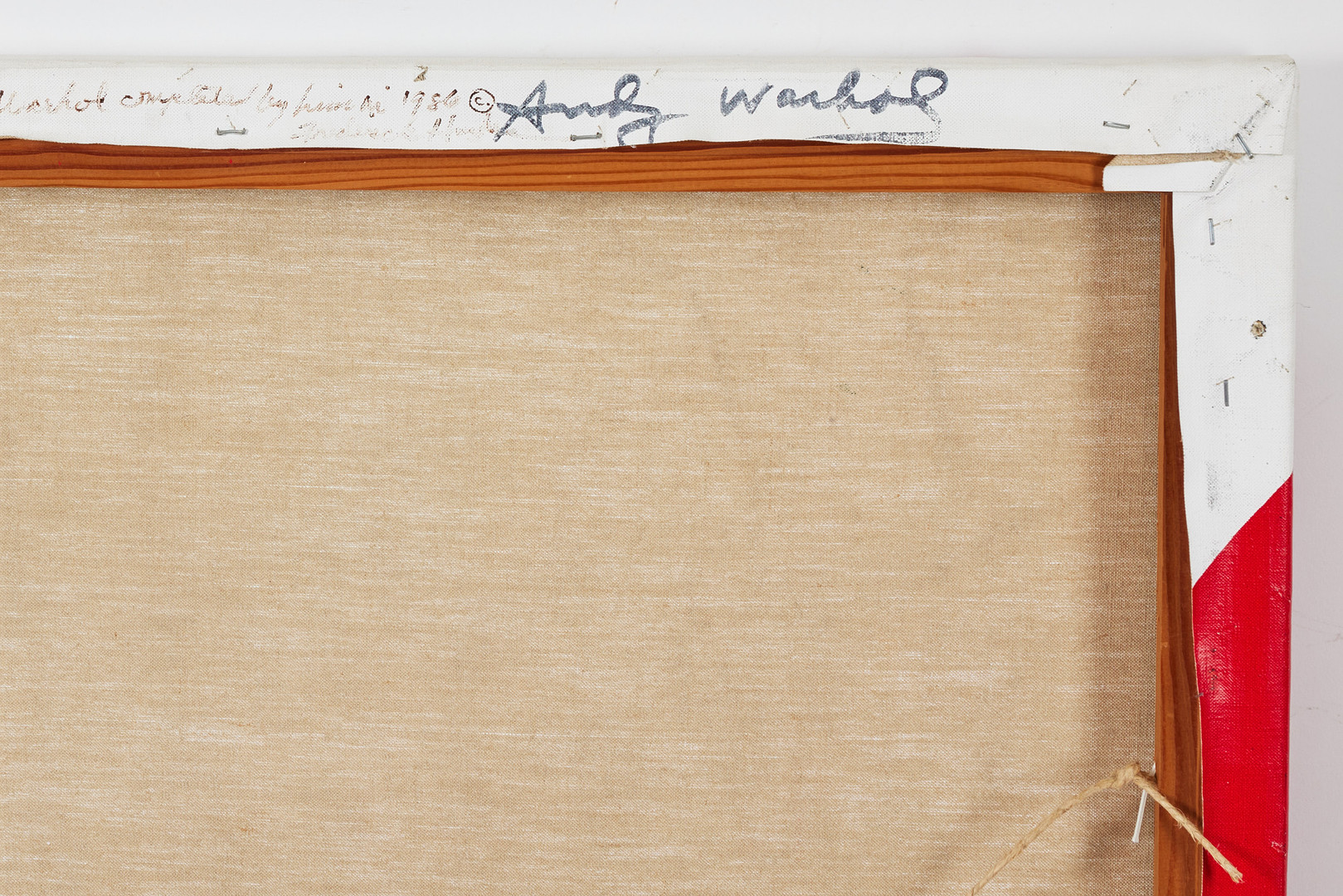
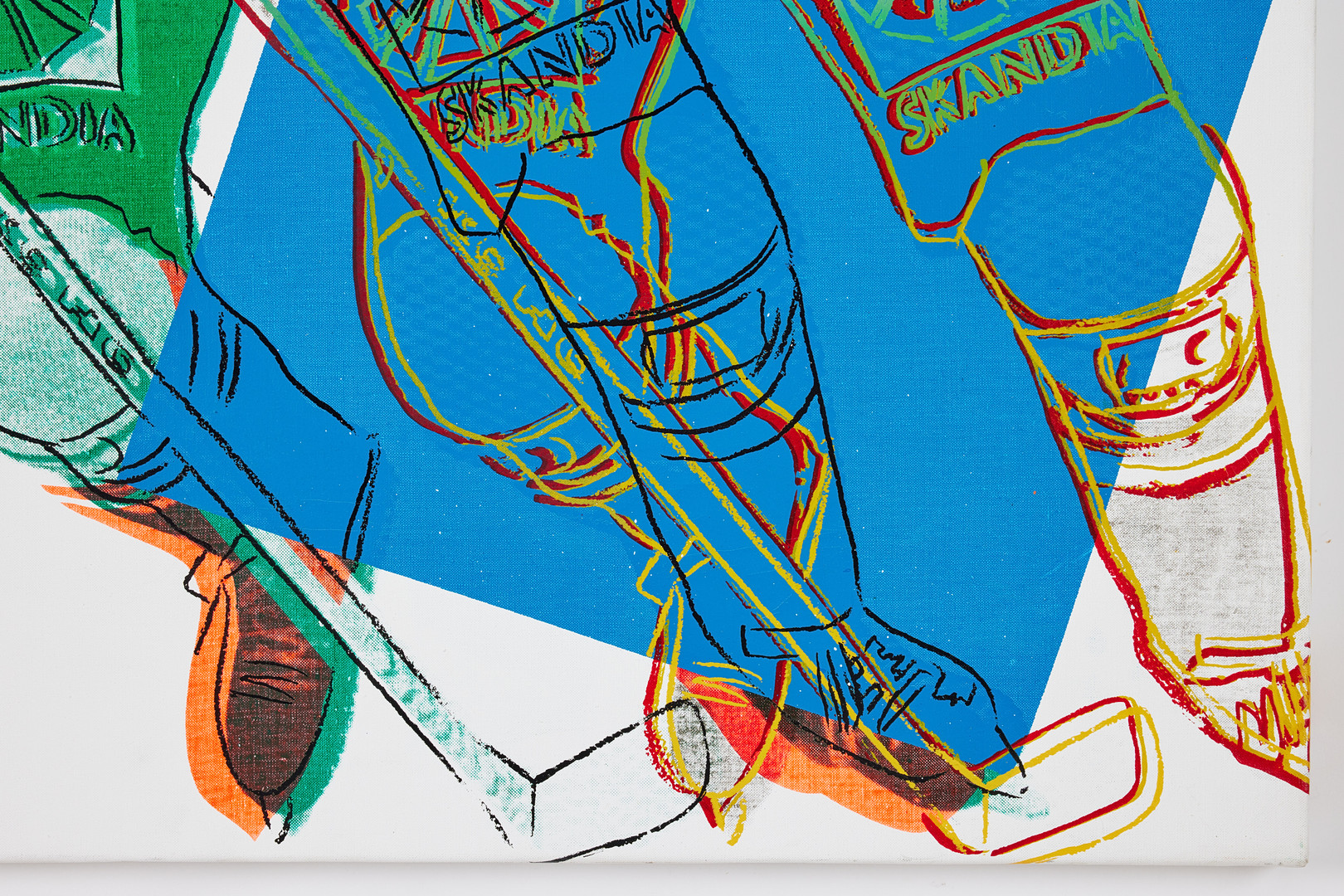
Acrylic and silkscreen ink on canvas, 101.6 x 101.6 cm. Stamp signed Andy Warhol on the overlap.
Executed in 1986.
Inscribed on the overlap: "I certify that this is an original painting by Andy Warhol compiled by him in 1986, Frederick Hughes".
With the Andy Warhol Art Authentication Board stamp on the overlap and the Identification number A111.095.
The certificate from the Andy Warhol Art Authentification Board. Inc. is included with this lot.
PROVENANCE
A Swedish private collection.
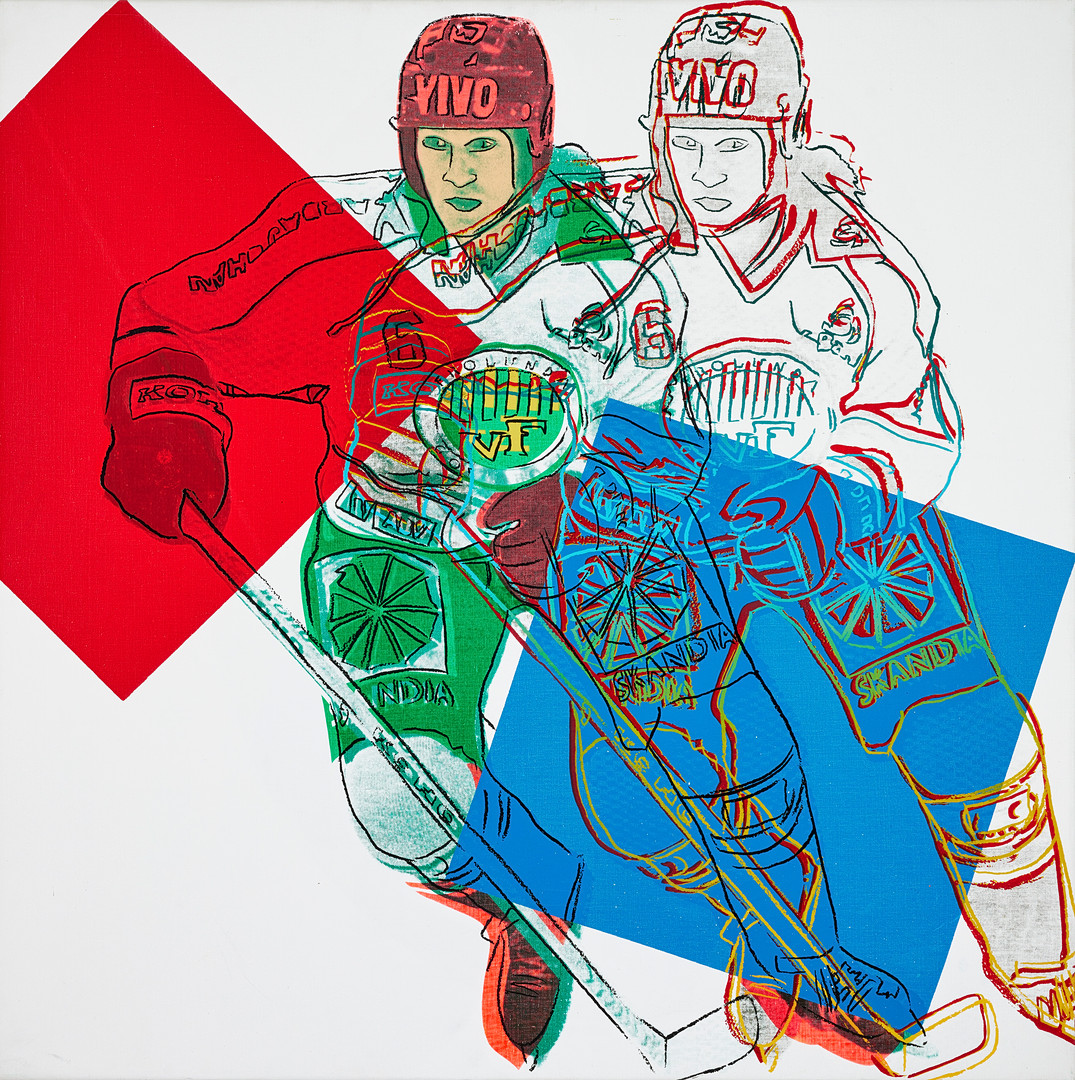
Andy Warhol, the undisputed icon of Pop Art, demonstrated throughout his career a deep fascination with idols, symbols, and mass-cultural phenomena – from movie stars to soup cans. In Frölunda Hockey Player (1986), Warhol turns his gaze toward the world of sports, and specifically ice hockey, a sport that carries significant cultural weight both in the United States and in the Nordic countries.
Warhol’s connection to the Gothenburg team originated when Västra Frölunda broke away from Västra Frölunda IF to form its own club – Västra Frölunda HC – in 1984. The finances of the newly established club were under considerable strain. One of those driving the initiative, alongside the current owner of the painting, was Hans “Bula” Andersson, then chairman of Västra Frölunda HC. The club’s management had heard that another team in the Swedish Elite League had commissioned artworks to raise funds for their club, and that the proceeds had gone directly into their treasury. This sparked the idea that Västra Frölunda could do something similar. The question quickly arose: who was the most famous artist in the world at that moment? Andy Warhol’s name was mentioned.
The painting’s owner picked up the phone and called directory assistance in New York – and got through. After an initial conversation with Andy Warhol and his manager, Fred Hughes, during which a verbal agreement was reached, representatives from Västra Frölunda flew to New York in the spring of 1986. They brought with them press photographs and other visual materials from Gothenburg, including images from Göteborgsposten. Warhol chose to base the work on a photograph of Västra Frölunda’s first-line center, Christer Kellgren. The meeting at Warhol’s studio, The Factory, was informal and relaxed, and even included an impromptu workout in the studio’s gym before the Swedish visitors returned home.
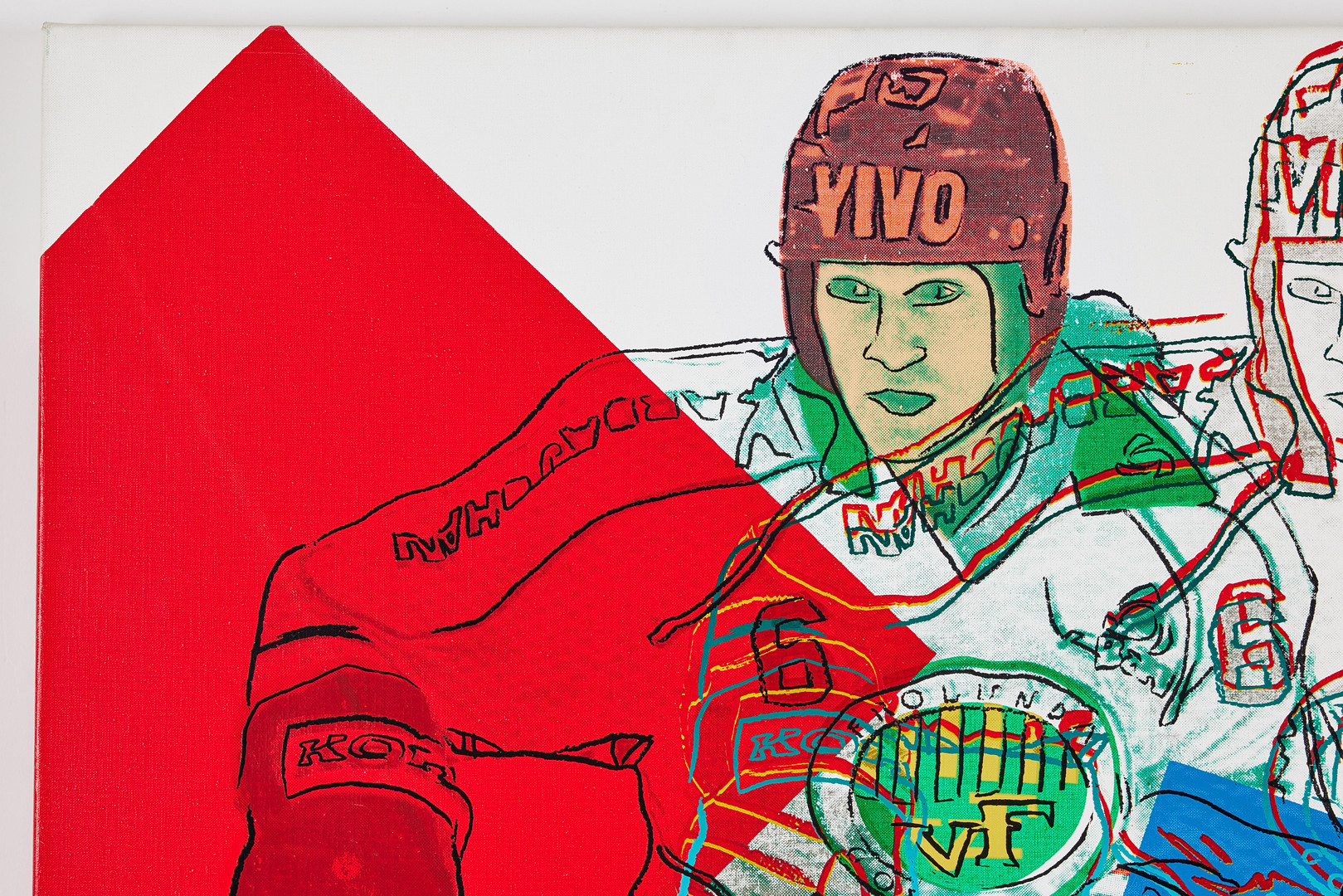
Some time later, another trip to New York followed. When the representatives visited The Factory again, Warhol presented the drafts he had created. The final choice fell on a portrait of Christer Kellgren against a black background incorporating all of Västra Frölunda’s colors – white, red, green, and black. As the Swedish guests were leaving, Warhol said to them at the door: “Don’t forget to say hello to Mr. Vivo,” referring playfully to Kellgren, since it was common in the NHL for players’ names to appear on their helmets.
Back in Sweden, a silkscreen painting of the motif was presented to the club chairman before a home game against AIK. Unfortunately, Frölunda lost the match 3–1 – but it is not often that art history is made in an ice hockey rink. From the silkscreen painting, a series of screenprints was later produced by Rupert Jasen Smith in New York and published by Art Now in Gothenburg. The proceeds from both the painting and the screenprints provided a much-needed financial boost to Västra Frölunda’s club treasury.
After Warhol’s death, the project’s initiator received a phone call from Warhol’s manager, Fred Hughes, informing him that the artist’s estate had something they wished to show him. Once again, a trip across the Atlantic followed. The atmosphere at The Factory had of course changed profoundly after Warhol’s passing, but there awaited a larger canvas featuring a double image of Kellgren – a work that had never before been shown publicly, and which is now presented in this auction.
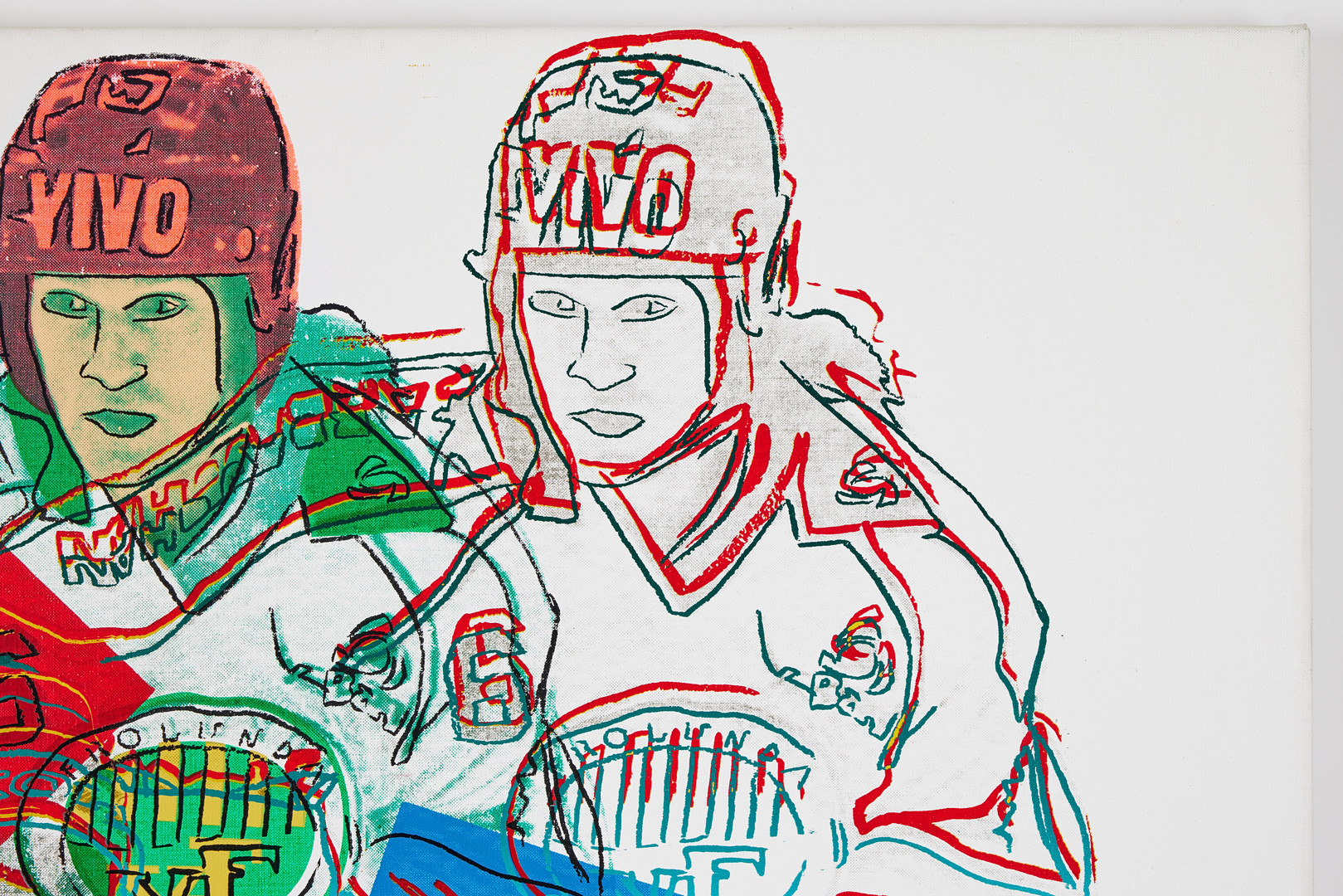
Through the double exposure of Kellgren’s image, Warhol places the hockey player within the same visual universe as Marilyn Monroe and Elvis Presley. Combined with the stark white background, the painting creates a striking encounter between the raw energy of sport and the graphic language of Pop Art, capturing both the power of the game and the player’s elevated status as an icon.
With its unique blend of international Pop Art and Nordic sports culture, Frölunda Hockey Player is not only a work of great interest to collectors, but also a compelling example of Warhol’s enduring ability to transform the everyday into modern iconography.