DAHLBERG, ERIK. Suecia antiqua et hodierna. I-III and Index. About 1680-1718.
Oblong folio (c. 300x400 mm., binding 310x410). 349 engraved plates and 13 pages Index at the end (of 355, lacking the extra plate [Templum Ulricae Eleonorae ],and 5 other plates [portrait Eric Dahlberg; Arcus Triumphalis... Udalricae Eleonorae; Tessini Palatium Holmense, qua etrorsum...; Drottningholm lacus versus; Höijentorp], 1 plate defect [Ekolsund], plates mainly on whole paper, a few of the smaller ones cut into plate marks, all mounted in left margin to the same size as the larger plates with late 18th century paper, about 15 plates with mostly marginal damages or mendings [including one of the large Stockholm plates], a few plates marginally dampstained, about 30 plates yellowed or somewhat browned, minor foxing).
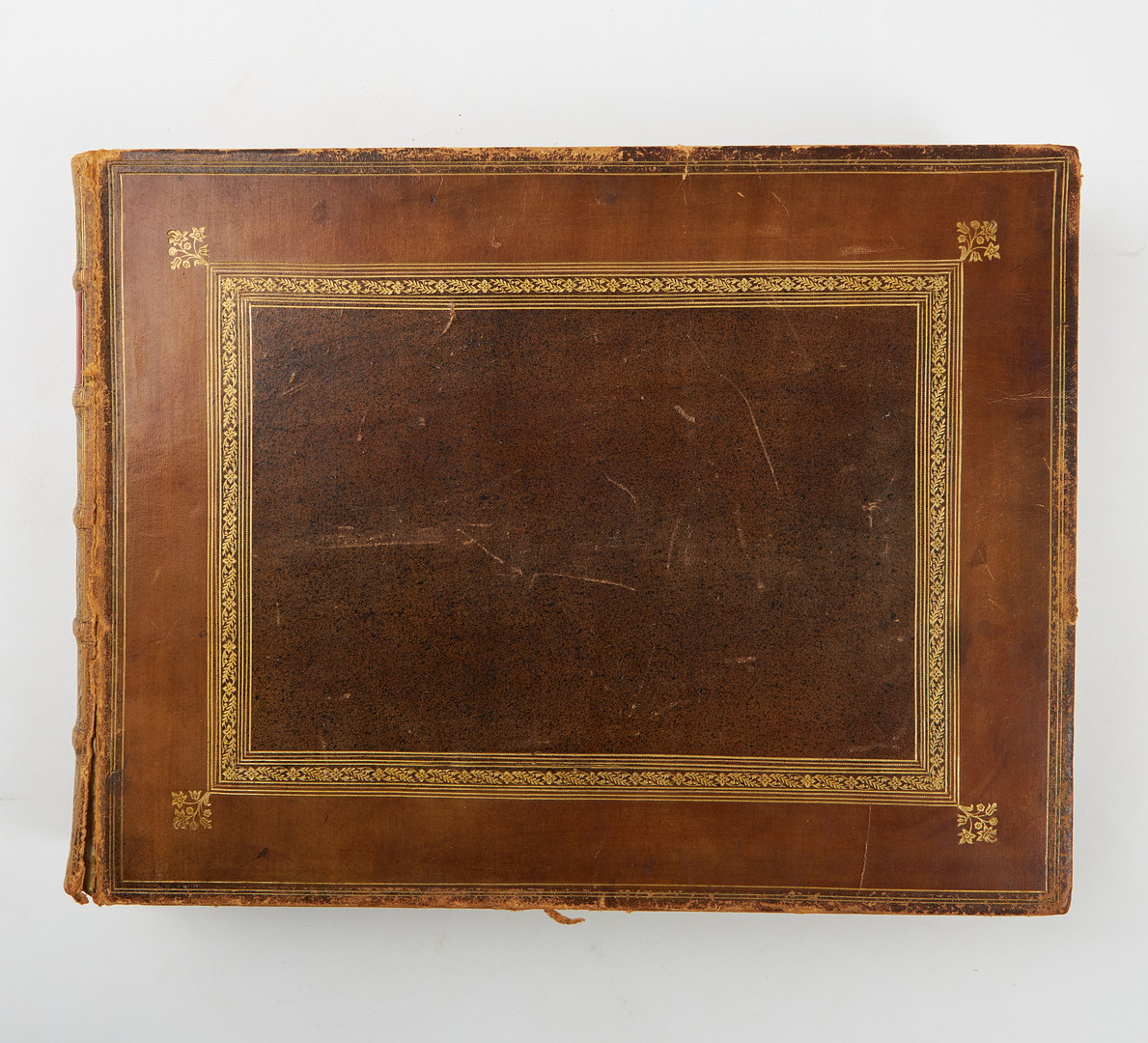
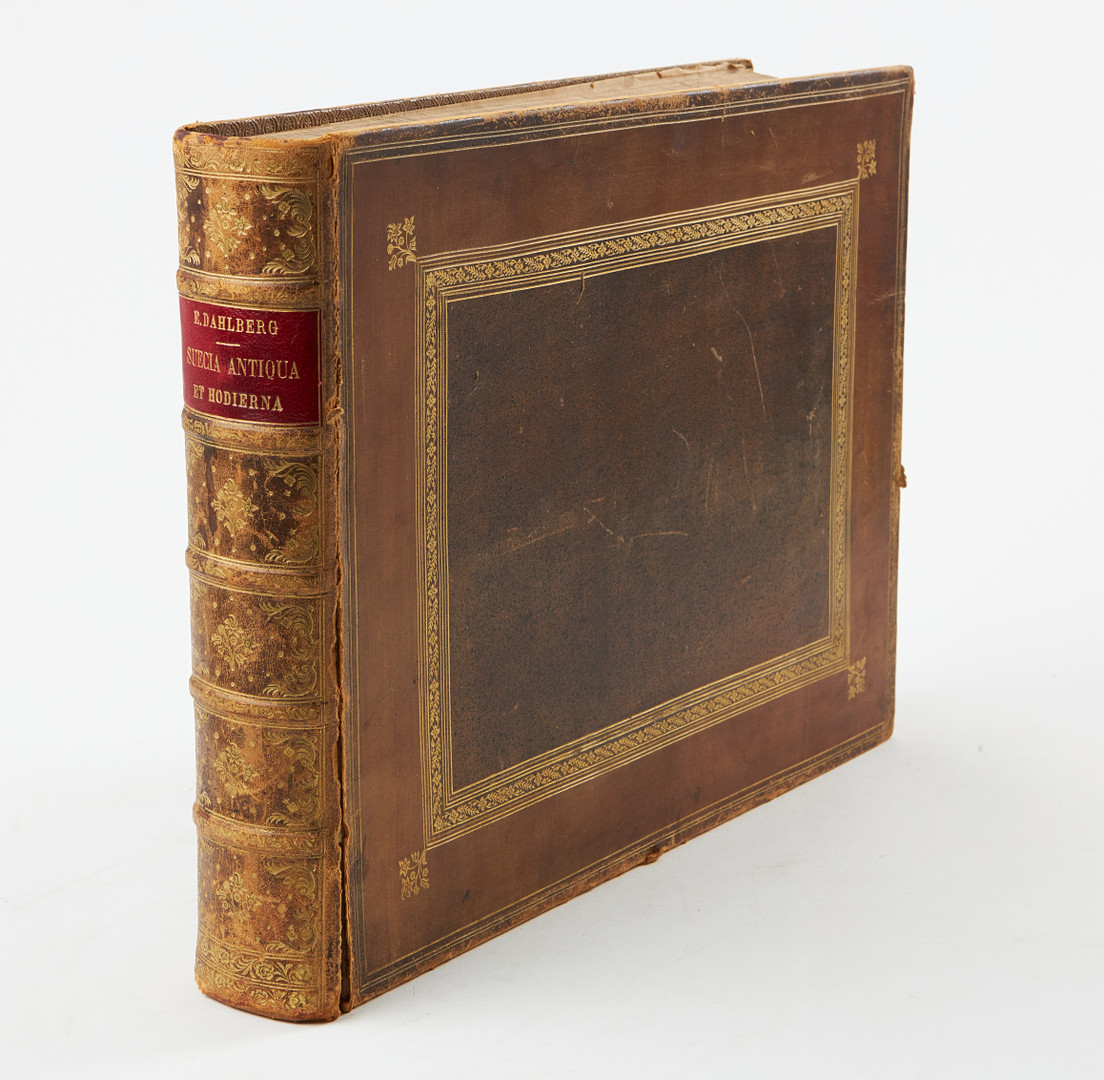
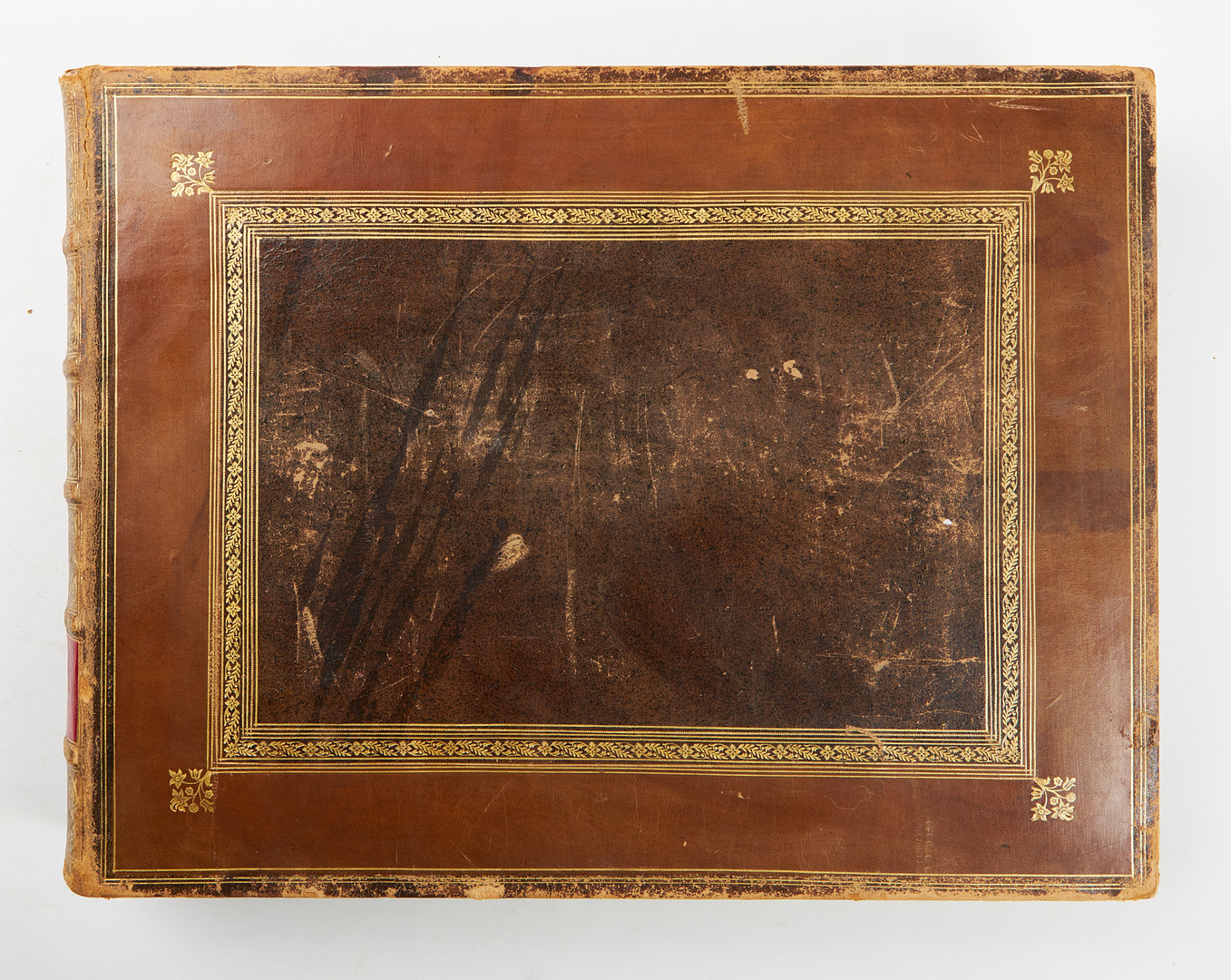
Somewhat later (late 18th century) brown full calf, cracked in upper joint, partly worn, gilt frames, richly gilt spine in six compartments, marbled edges. Bookplate of Carl Uggla and Pro Finlandia.
Provenance: Carl Uggla (1725-1803), chamberlain, member of The Royal Swedish Academy of Sciences, wrote works in topography, history amd heraldry, see Carlander II:2 pp. 564-565; Pro Finlandia auction 1940, item 246.
Collijn, Sveriges Bibliografi, 1600-talet, col. 197. Berlin Kat. 1, 2256; Brunet V 578; Lipperheide 1037; Klemming, Ur en antecknares samlingar, Uppsala 1880-82, pp. 165-8. Sten G. Lindberg, Swedish Books, 37.
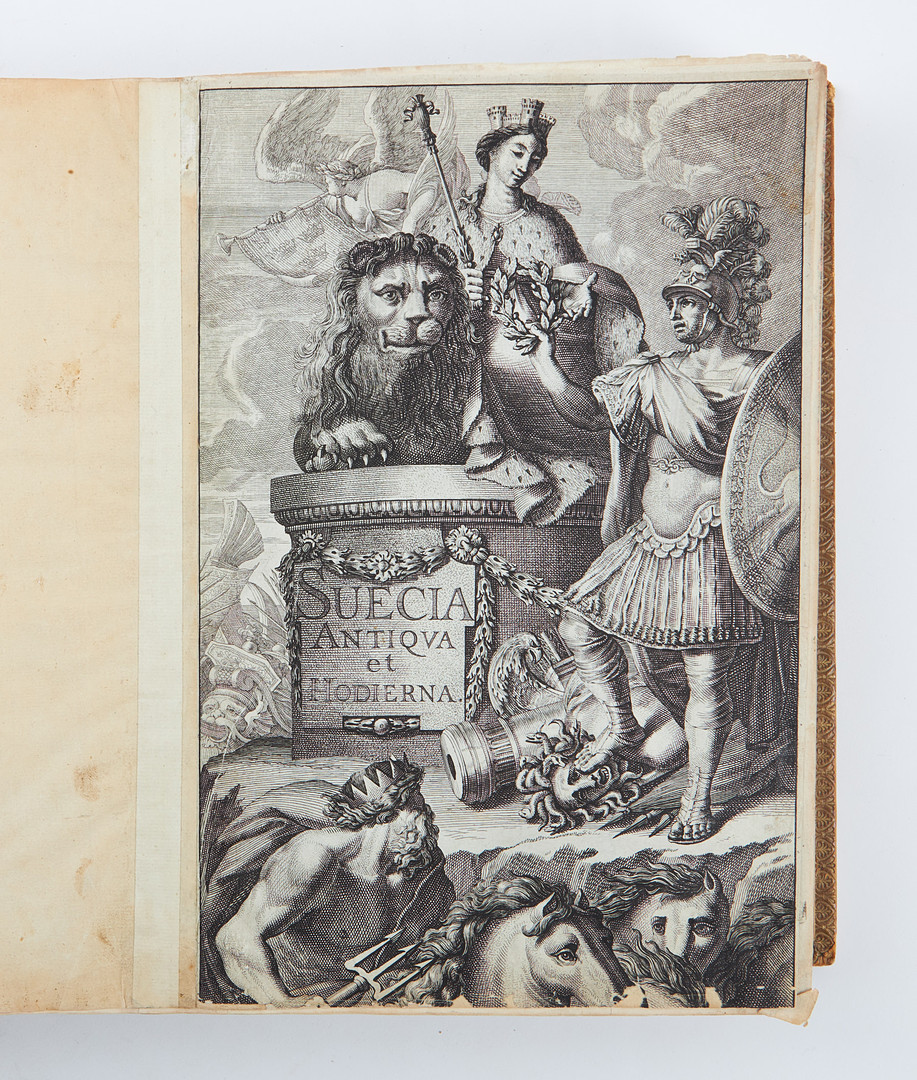
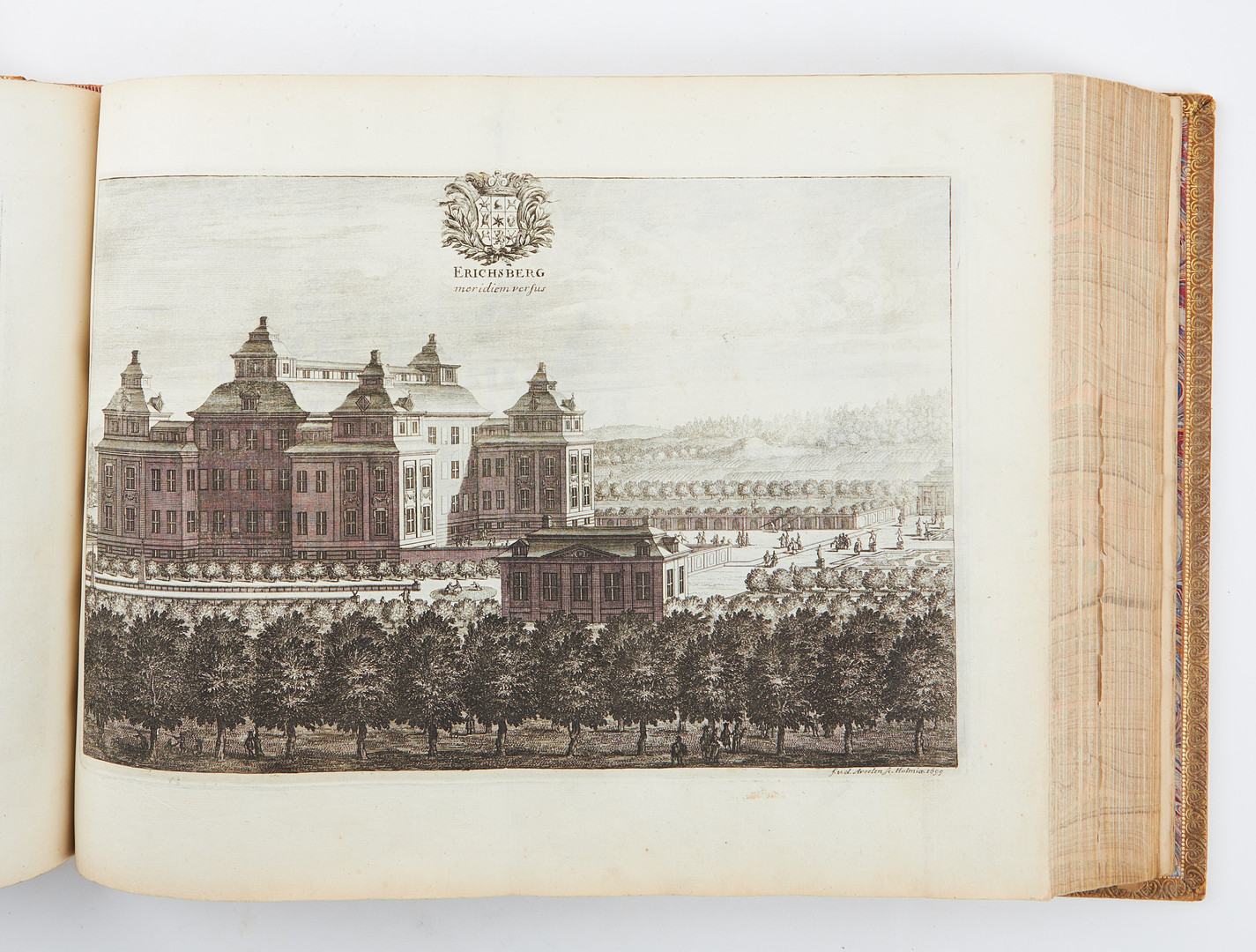
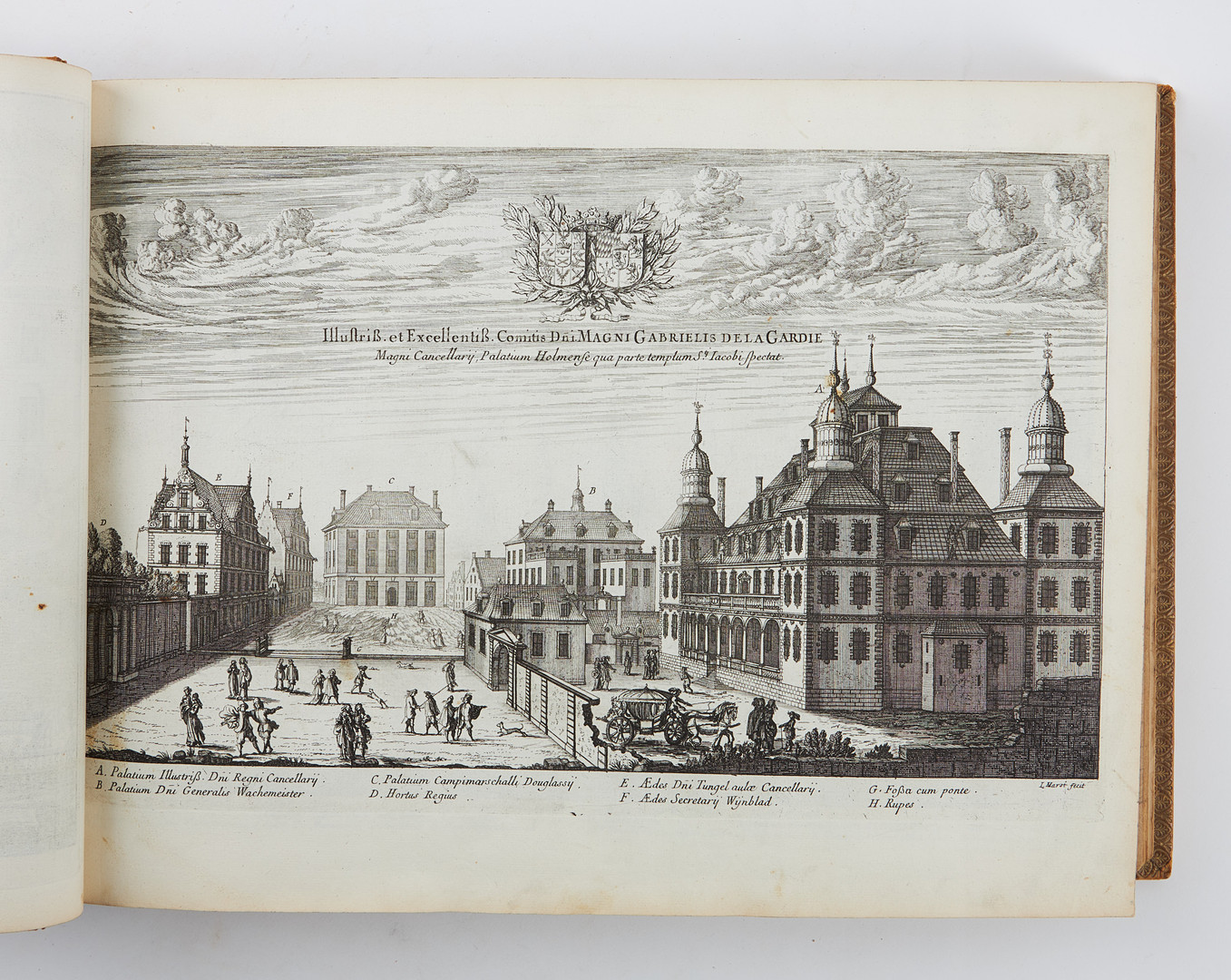
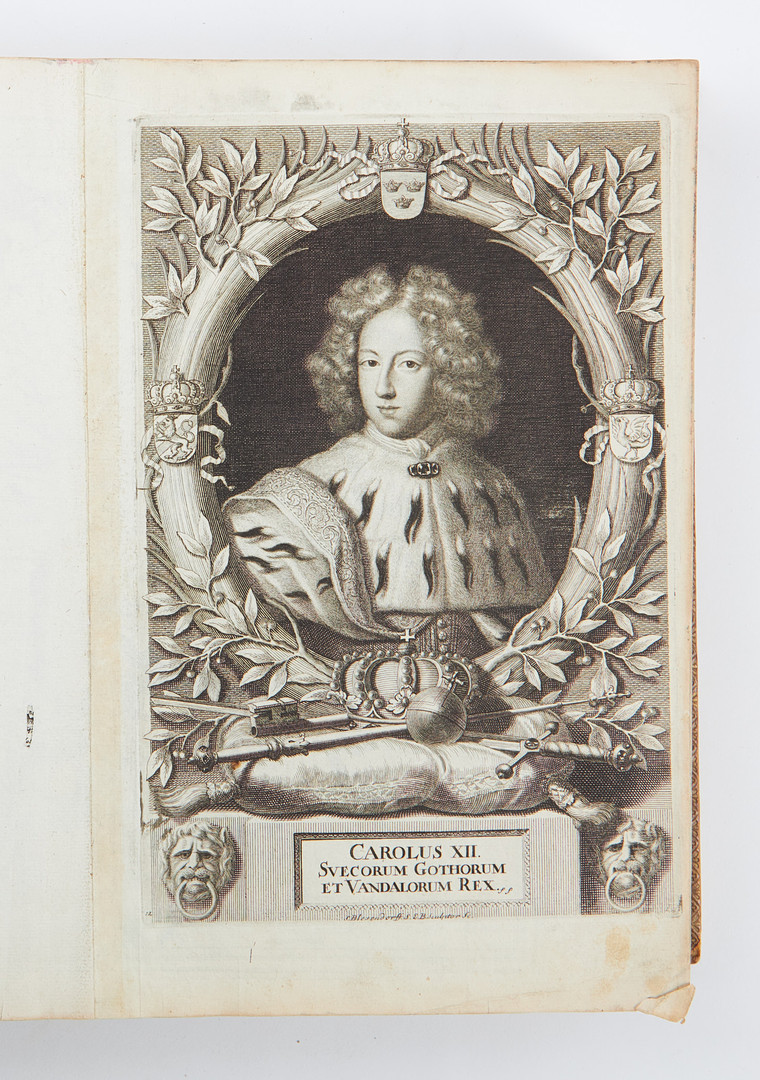
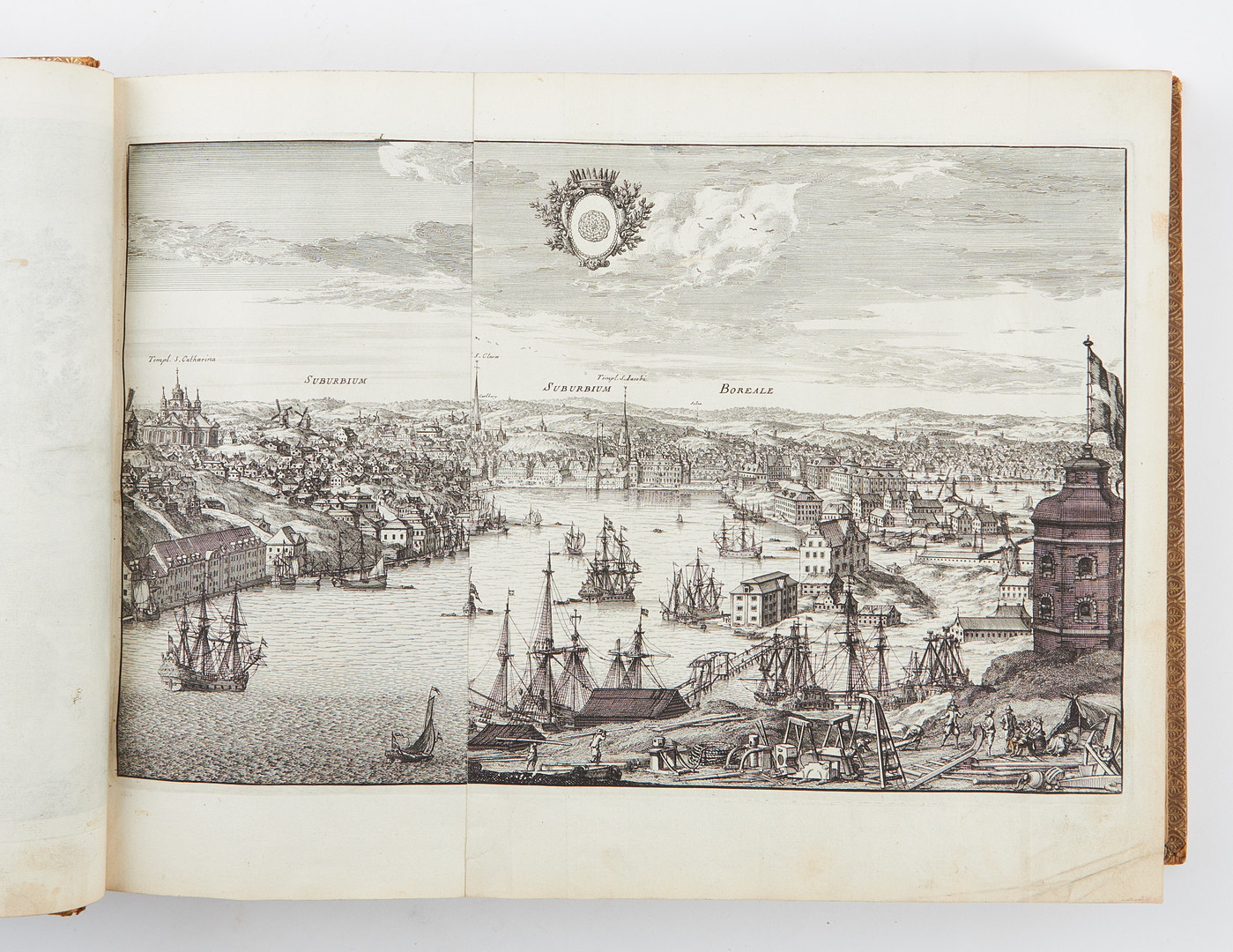
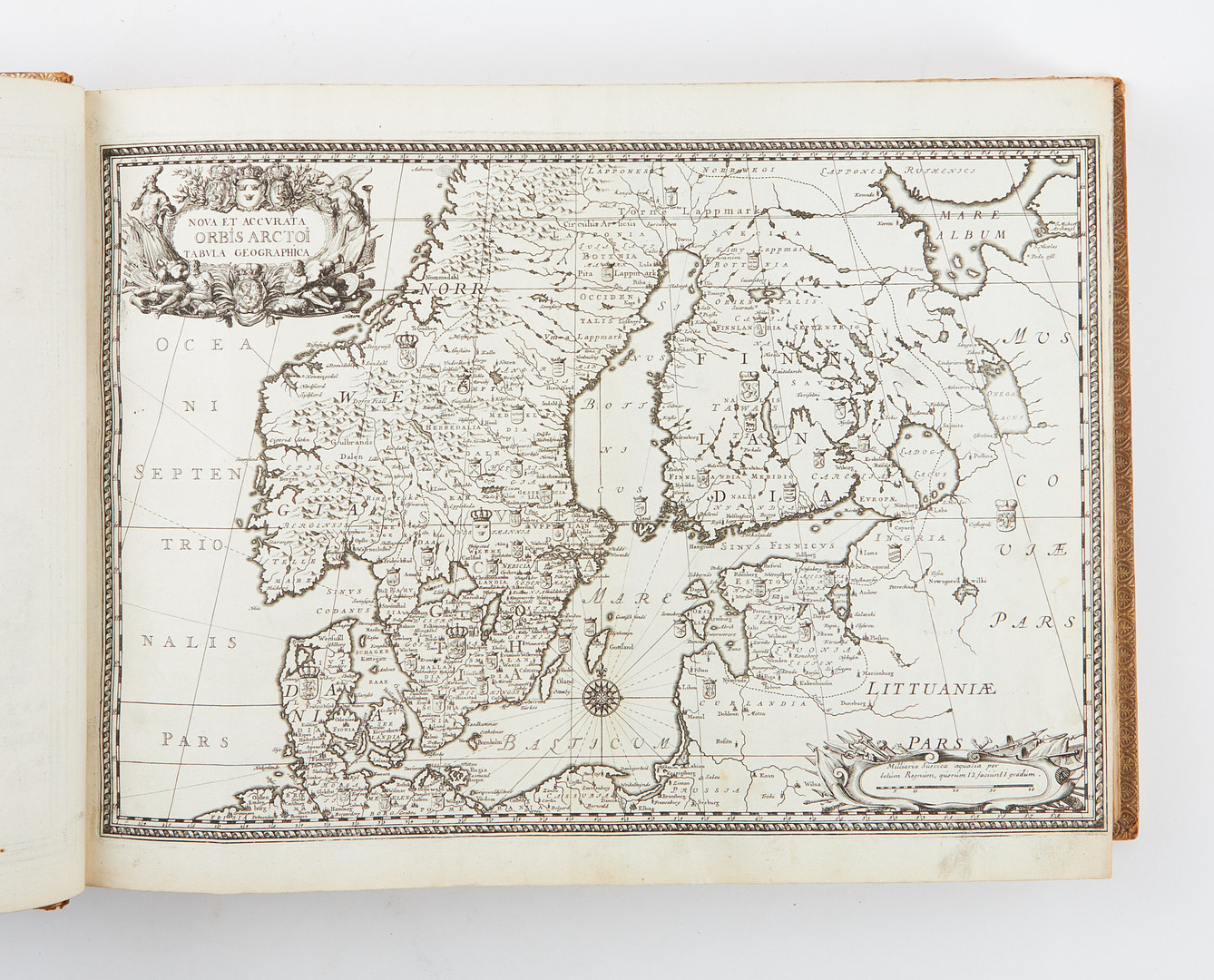
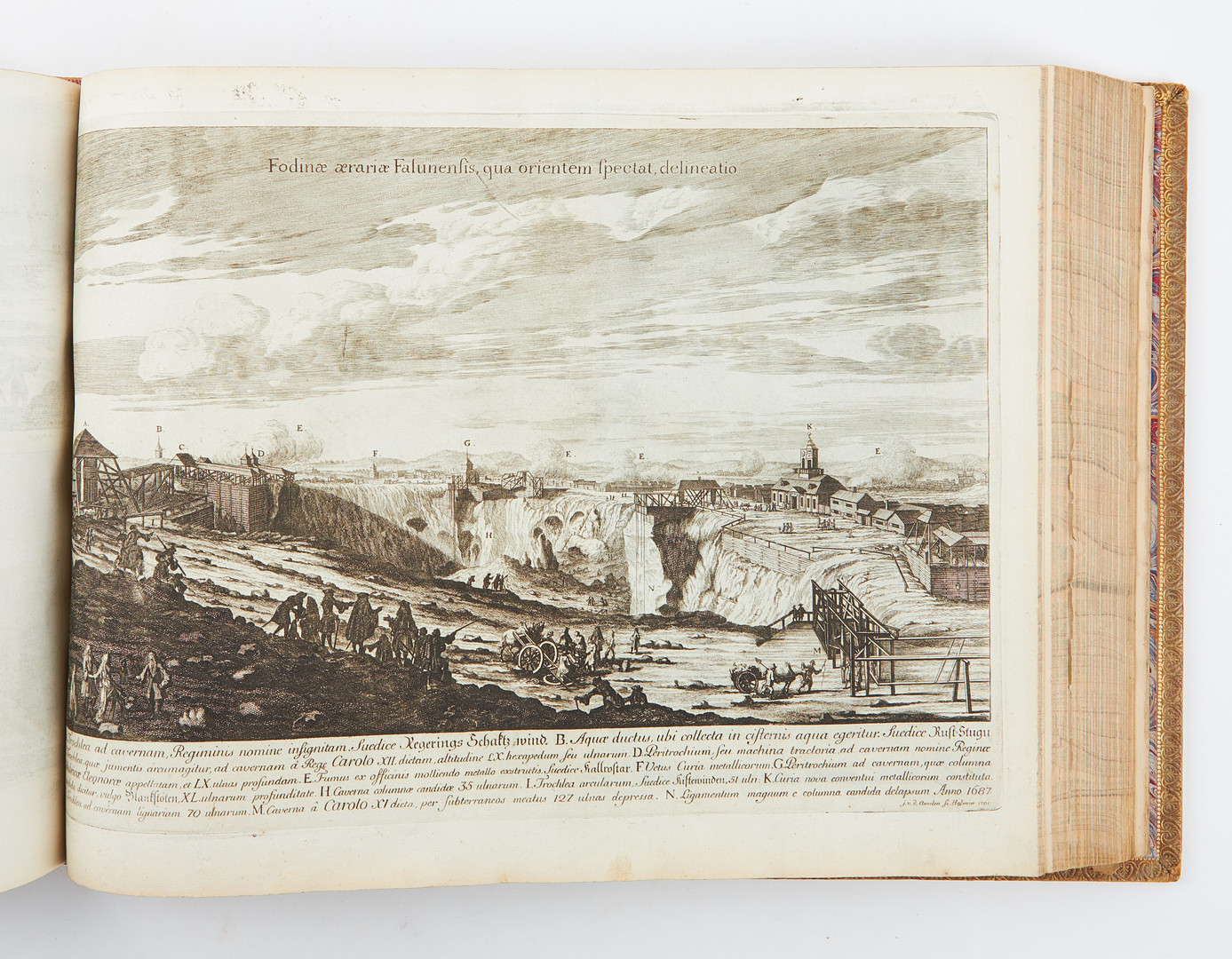
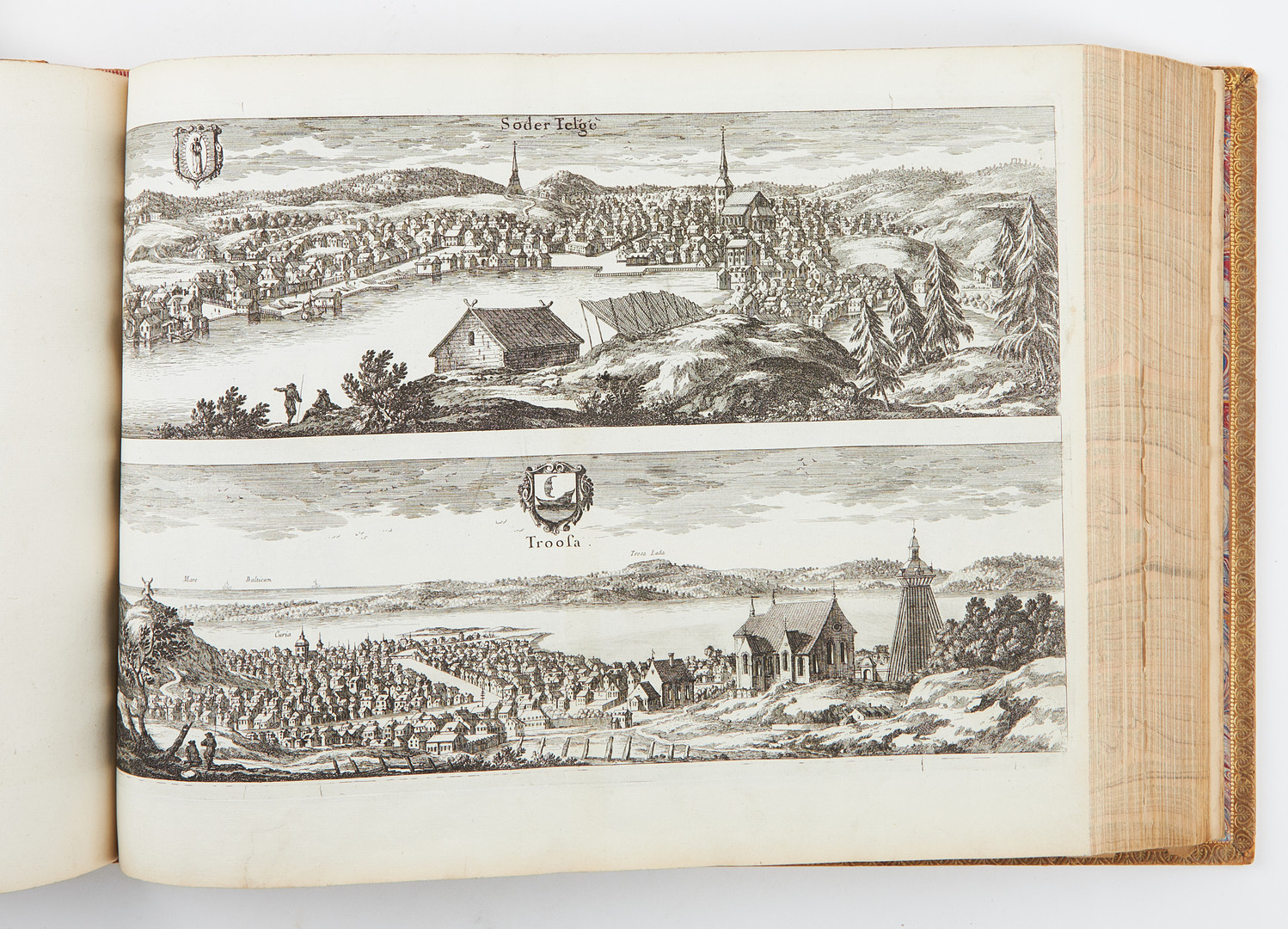
One of the most important topographical and architectural works on Sweden by the architect and military engineer Erik Dahlberg. This magnificient work is illustrated with amongs others 3 titles, portraits of kings Charles XI and XII, author's portrait by S. Blesendorff, maps (i.a. "Veteris orbis arctoi typus" and "Nova et accurata orbis arctoi tabula geographica"), coat-of-arms of Sweden, views of monuments, settlements, manors, fortifications, cities (Stockholm, Uppsala), castles, gardens, ancient relics, etc.
During his military service and studies in Germany, Erik Dahlberg (16251703) became acquainted with Matthaeus Merian the younger, the publisher of "Theatrum Europaeum" and the "Topographies". On his return to Sweden in 1661, Dahlberg obtained a privilege from the Government to make drawings for a similar publication. The engravings for this work were executed from these drawings by a total of 18 artists except for a few, which were based on drawings by David Klöcker Ehrenstrahl and Elias Brenner.
The project began in 1667 and the plates were engraved by many contemporary well-known European artists, Jean Marot, A. Perelle, Joh. Jacob von Sandrart, Lepautre, Dionysius Padtbrugge, E. Reitz, W. Swidde, J. van Aveelen, etc.