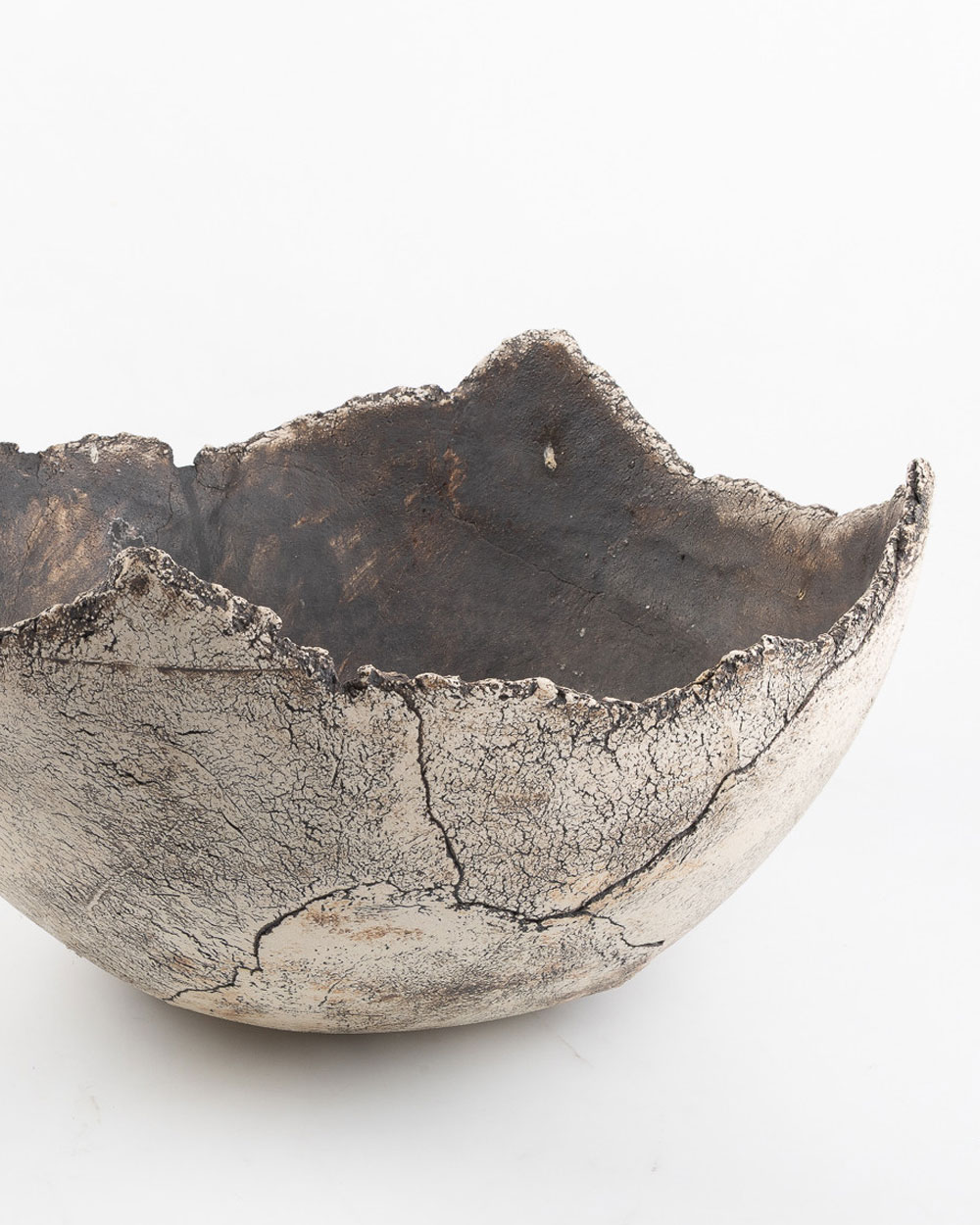
Viotti (b. 1933) began her ceramic training as early as the age of 17 at the School of Art in Blackpool. As one of the youngest students ever admitted, she entered Konstfack in Stockholm in 1952, studying under, among others, Märta Anckarswärd Grönwall and Edgar Böckman. After graduating, she held positions at, among other places, Rörstrand and with Irma Yourstone. In 1960, Viotti took over the workshop of ceramicist Olle Hermansson in Karlskoga. Having initially worked within a more traditional ceramic tradition of figures and functional objects, she soon developed an interest in the sculptural possibilities of clay. Her works attracted attention and were exhibited early on, not least as permanent features in the shop “Ola Inredning” in Karlskoga, where they were shown alongside furniture by Alvar Aalto and ceramics by Carl-Harry Stålhane. Viotti also gained early recognition in Stockholm, with exhibitions at, among other venues, Konsthantverkarna in 1962, Svensk Hemslöjd’s jubilee exhibition at Liljevalchs konsthall, and not least the groundbreaking exposition “Form Fantasi”, organised by Svenska Slöjdföreningen in 1964.
In 1965, Viotti moved her practice to Wadköping, and following study trips to, among other places, Italy, Israel and Jordan, a shift towards larger and more spatially oriented works took place. In certain periods her work was characterised by a more austere, almost ascetic approach. The colour palette was kept muted and the focus placed on structure and light. In other phases she opened up to greater variation in surface and firing, where traces of the creative process and the transformation of the material became prominent elements. Viotti later moved her practice to Skåne, first to Glivarp (Hammenhög) and subsequently to Äppellunden in Brantevik. From the 1990s onwards, brick became a defining element of her artistic practice. During this period she developed some of her most characteristic public installations. Viotti’s brick books featuring quotations from well-known authors and thinkers also became a clear hallmark of her art.
Within a Swedish art historical perspective, Viotti’s work can be understood as a further development of modernism’s interest in the intrinsic value of materials, while at the same time breaking with ceramics’ traditional position as applied art. Together with contemporaries such as Hertha Hillfon and Anders Bruno Liljefors, she contributed to redefining the contemporary Swedish ceramic tradition.
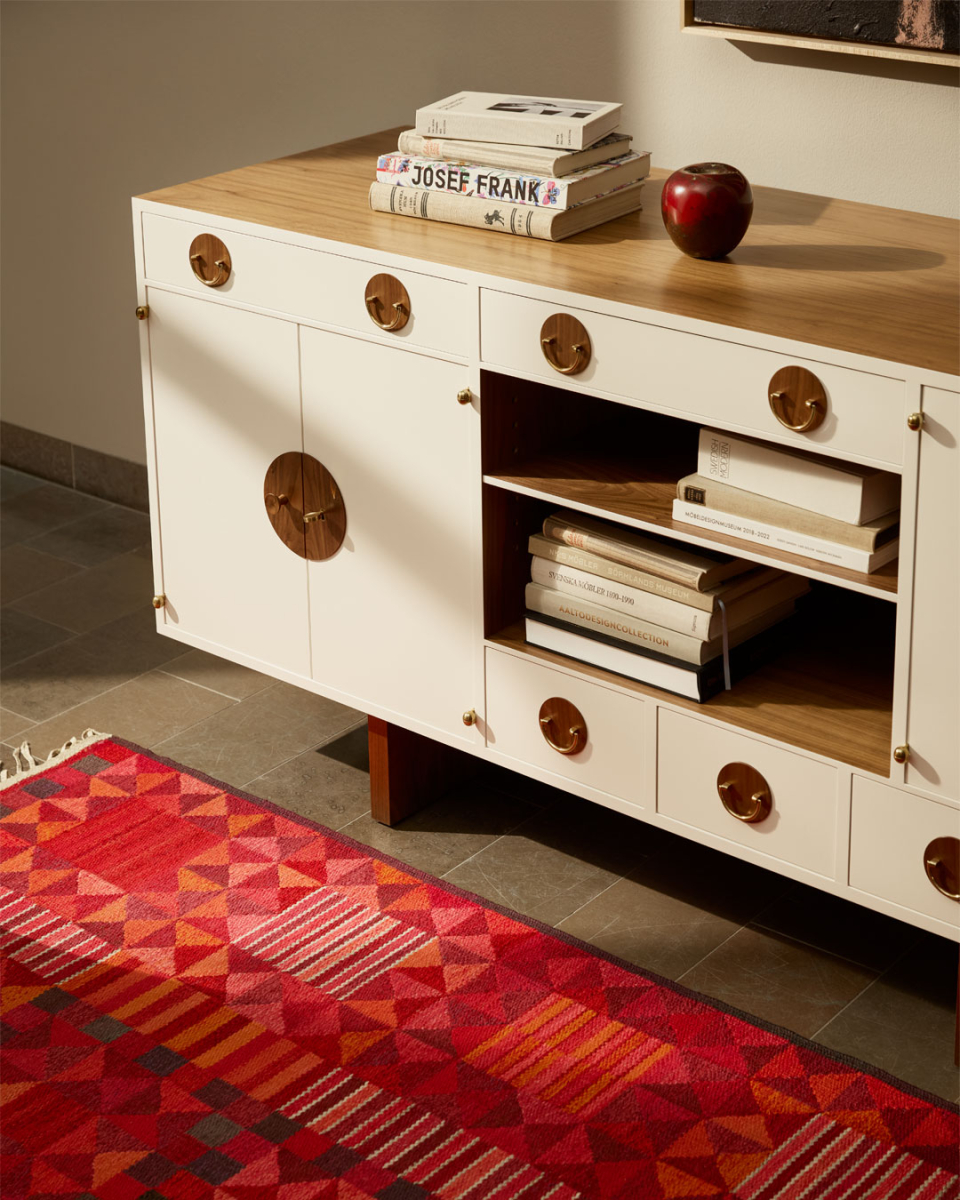
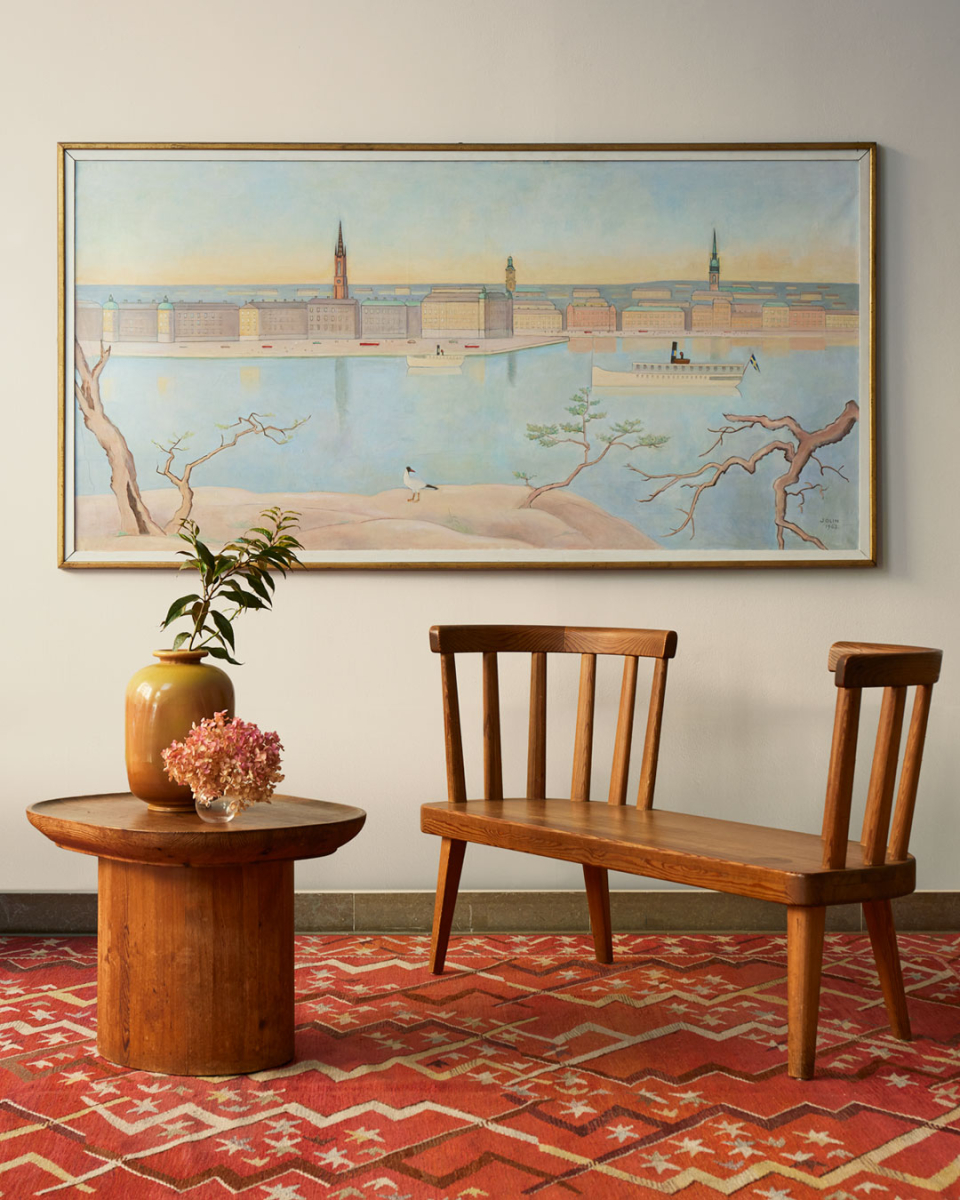
In “Ulla Viotti: Konst, liv och lera” Parts 1 and 2, we are offered a unique insight into this fascinating artistic practice, in which her own ceramics are mixed with the objects she carefully chose to surround herself with in her own home and studio.