“Solträdet” by Gösta Adrian-Nilsson
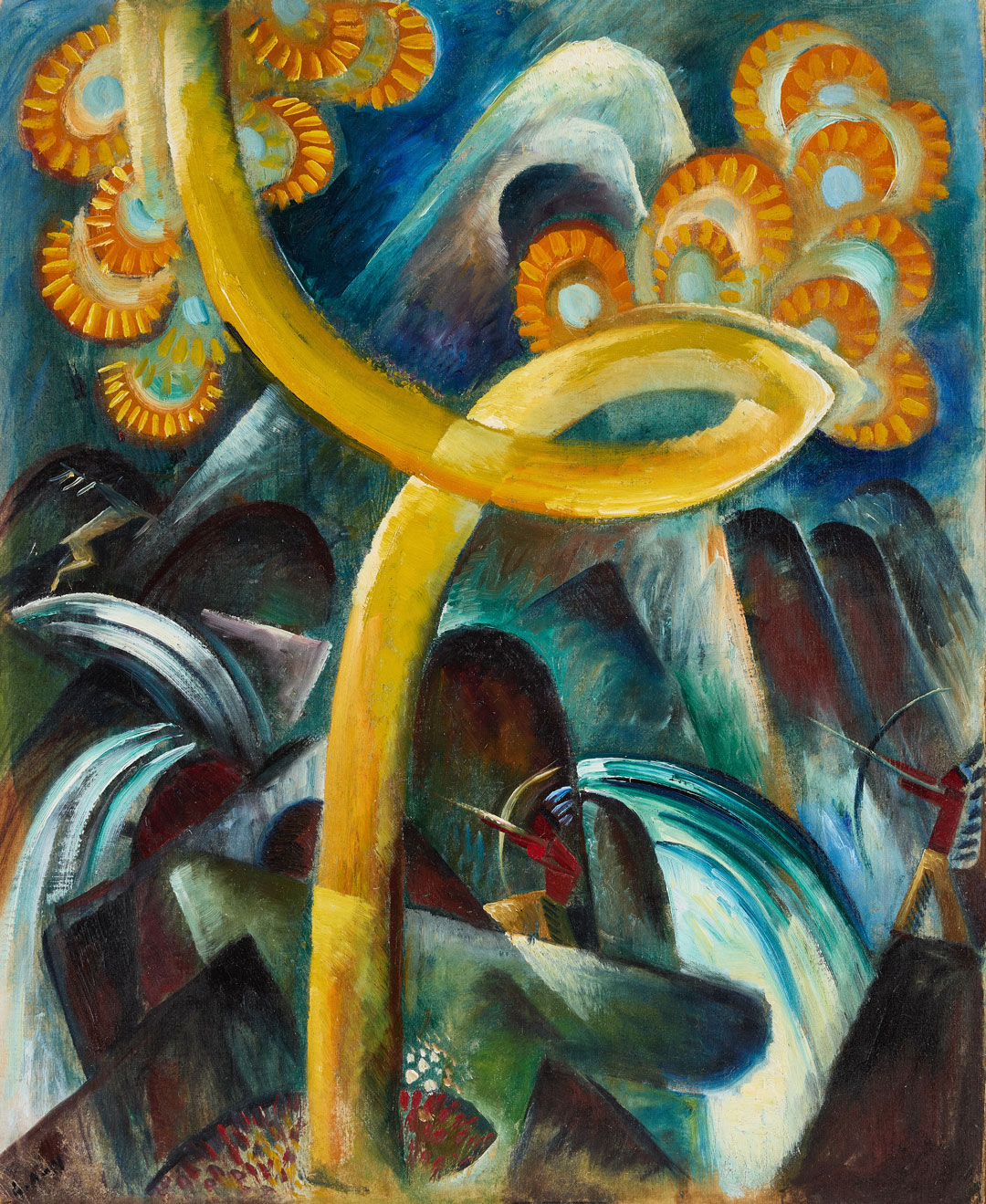
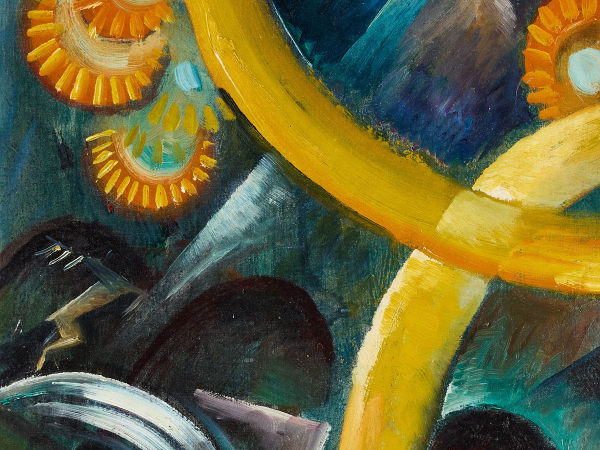
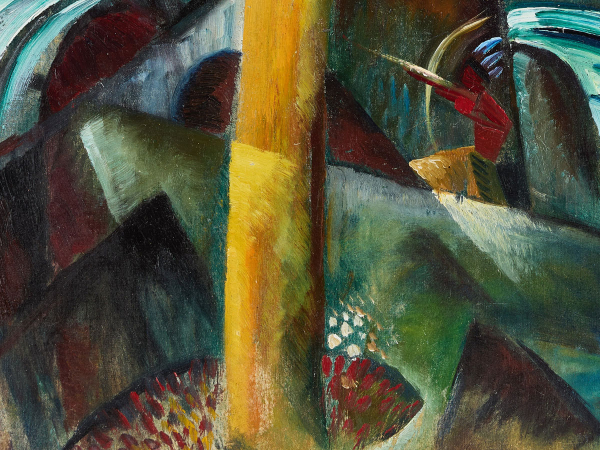
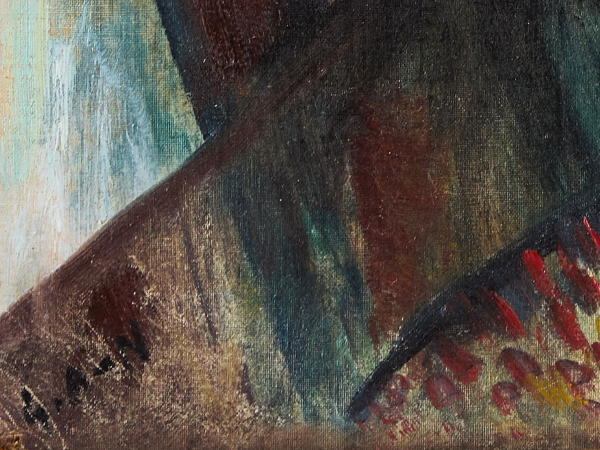
At this spring’s The Modern Art Sale, one of the most fascinating and enigmatic works from Gösta Adrian-Nilsson’s early production is presented: Solträdet (The Sun Tree) (1919). Executed in oil on canvas and mounted on panel, signed G A-N, the painting belongs to a pivotal period in the artist’s life and career – a year marked by both personal reassessment and artistic renewal.
It is particularly noteworthy that Solträdet is now being shown to the public for the first time in over a century. Since its appearance at Liljevalchs konsthall in 1919, the painting has not been publicly exhibited, making this presentation a unique opportunity to rediscover a long-withheld work from GAN’s oeuvre.
When Solträdet was created, GAN had lived in Stockholm for just over two and a half years – a period characterised by intensity, social turbulence and artistic productivity. His time in the capital was kaleidoscopic, filled with pleasures, relationships and vivid impressions, but also marked by inner conflict and searching. During these years, he developed his well-known sailor motifs – charged symbols of desire, identity and longing – while simultaneously returning to imagery drawn from the romanticised depictions of “Indians” and cowboys found in adventure literature.
Solträdet emerges precisely at this turning point. The painting connects to GAN’s return to Indigenous-themed motifs during 1918–1919, a period in which he seems to have sought new forms of expression after his intense focus on sailor subjects. At the same time, the work suggests something more: a movement away from the strictly figurative towards a more experimental and symbolically charged visual language.
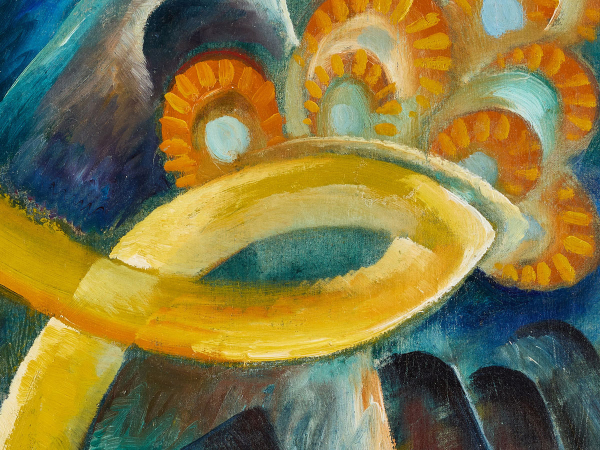
The central element of the work – the strange, almost visionary tree – appears both unexpected and laden with meaning. It may be interpreted as an expression of GAN’s growing interest in spiritual and philosophical questions, not least Theosophy, which attracted many artists at the time. The tree thus becomes more than a motif; it functions as a symbol of life, development and a striving for a deeper reality beyond the visible.
The year 1919 also marked a breakthrough in GAN’s artistic development towards non-figurative painting, culminating in works such as Abstract I. In this light, Solträdet can be seen as an important step in that process – a painting in which figurative elements still remain, but where form begins to dissolve and take on new, more abstract meanings.
That the painting is likely identical to the work of the same title shown at Liljevalchs’ spring exhibition in 1919 further enhances its significance. It situates Solträdet within a concrete art-historical context and makes it a document of a specific and decisive phase in GAN’s career – while its long absence from public view is now finally broken.
Its later association with a theosophical collective in the Stockholm area also opens up further interpretations. Perhaps GAN himself saw the work as an expression of his spiritual quest – a reflection of an artist beginning to question his earlier life and instead seeking a deeper meaning in existence.
Solträdet is therefore not merely a painting, but a concentration of oppositions: between the sensual and the spiritual, between the figurative and the abstract, between outer life and inner journey. It is a work that captures an artist in transformation – and which now, after more than 100 years, re-emerges into the public light as one of the most significant and compelling highlights of the sale.
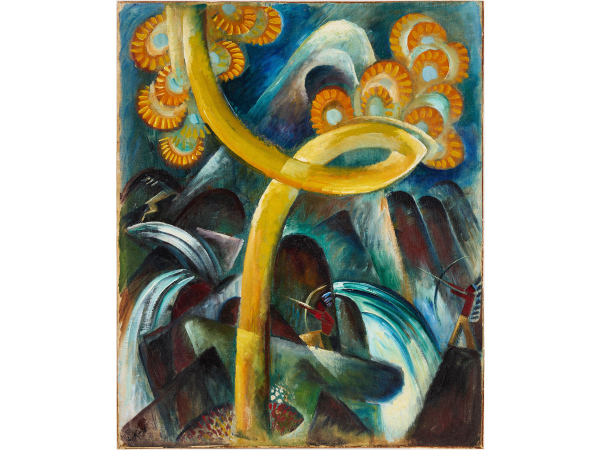
”Solträdet”
by Gösta Adrian-Nilsson
Estimate: 600 000 – 800 000 SEK
Viewing: May 8–19, Nybrogatan 32, Stockholm
Live auction: May 20
Enquiries & condition reports



Ajankohtaista

Lisätietoja meistä